Case Study — AstraFi
How We Built AstraFi
AstraFi provides the infrastructure layer that institutional investors need to safely deploy capital in DeFi markets — combining high-frequency trading engines, automated risk management, and regulatory-grade compliance in a single platform.
Project Timeline
From Discovery to Launch
Discovery
5-week regulatory and compliance mapping. Defined KYC/AML requirements, audit trail specifications, and institutional custody integration scope.
Architecture
Designed hybrid on-chain/off-chain architecture with protocol abstraction layer, risk engine, and MPC custody integration.
Development
14-week build: smart contract suite developed and independently audited, trading engine built, risk monitoring system deployed.
Testing
Stress testing against $4.1B simulated TVL. Two independent smart contract security audits. Circuit breaker testing against 2022 crash scenarios.
Launch
Mainnet deployment with phased capital migration. Zero settlement failures across 100K+ transactions in first 90 days of production.
Discovery
5-week regulatory and compliance mapping. Defined KYC/AML requirements, audit trail specifications, and institutional custody integration scope.
Architecture
Designed hybrid on-chain/off-chain architecture with protocol abstraction layer, risk engine, and MPC custody integration.
Development
14-week build: smart contract suite developed and independently audited, trading engine built, risk monitoring system deployed.
Testing
Stress testing against $4.1B simulated TVL. Two independent smart contract security audits. Circuit breaker testing against 2022 crash scenarios.
Launch
Mainnet deployment with phased capital migration. Zero settlement failures across 100K+ transactions in first 90 days of production.
The Challenge
Our client — an institutional asset manager — wanted to deploy capital into DeFi yield strategies but found every existing solution inadequate. Retail DeFi platforms lacked audit trails. Custodians couldn't interface with on-chain protocols. Compliance teams had no visibility. We were engaged to build from scratch.
Our Approach
How We Solved It
Regulatory Framework First
Before writing a single line of application code, we worked with legal and compliance teams to define the regulatory envelope: KYC/AML requirements, transaction monitoring thresholds, audit trail specifications, and reporting obligations.
Protocol Integration Layer
Built a unified protocol abstraction layer over Uniswap, Aave, Compound, and Curve. This insulated the application from protocol-level changes while providing a consistent interface for the trading engine.
Smart Contract Architecture
Designed and audited a suite of Solidity contracts for capital routing, yield harvesting, and emergency controls. All contracts underwent two independent security audits before mainnet deployment.
Risk Engine Development
Built a real-time risk engine calculating VaR, liquidity ratios, and protocol exposure across all positions. Automated circuit breakers were tested against 2020 and 2022 market crash scenarios.
Institutional Custody Integration
Integrated with institutional custody providers via MPC wallet infrastructure, enabling the client to maintain custody controls while interacting with DeFi protocols.
Engineering Process
How We Built It
On-Chain / Off-Chain Separation
Carefully separated on-chain execution logic (smart contracts) from off-chain orchestration (Node.js services) to minimize gas costs and maximize flexibility.
Event Sourcing for Audit Trails
Implemented event sourcing for all position changes and transactions, providing an immutable audit log that satisfies regulatory requirements.
Multi-Sig Governance
All critical contract operations require multi-sig approval, preventing single points of failure and aligning with institutional governance requirements.
Architecture Decisions
Key Technical Choices
TimescaleDB for Transaction History
Chose TimescaleDB over generic PostgreSQL for its native time-series compression and continuous aggregate capabilities — critical for high-frequency trading data at scale.
Hybrid Custody Model
Designed a hybrid custody model where institutional clients maintain key control while the platform handles protocol interaction — the only viable model for regulated entities.
Circuit Breaker Pattern
Implemented circuit breakers at both the smart contract level (on-chain pause) and application level (off-chain halt) to provide defense in depth against protocol exploits.
Platform Walkthrough
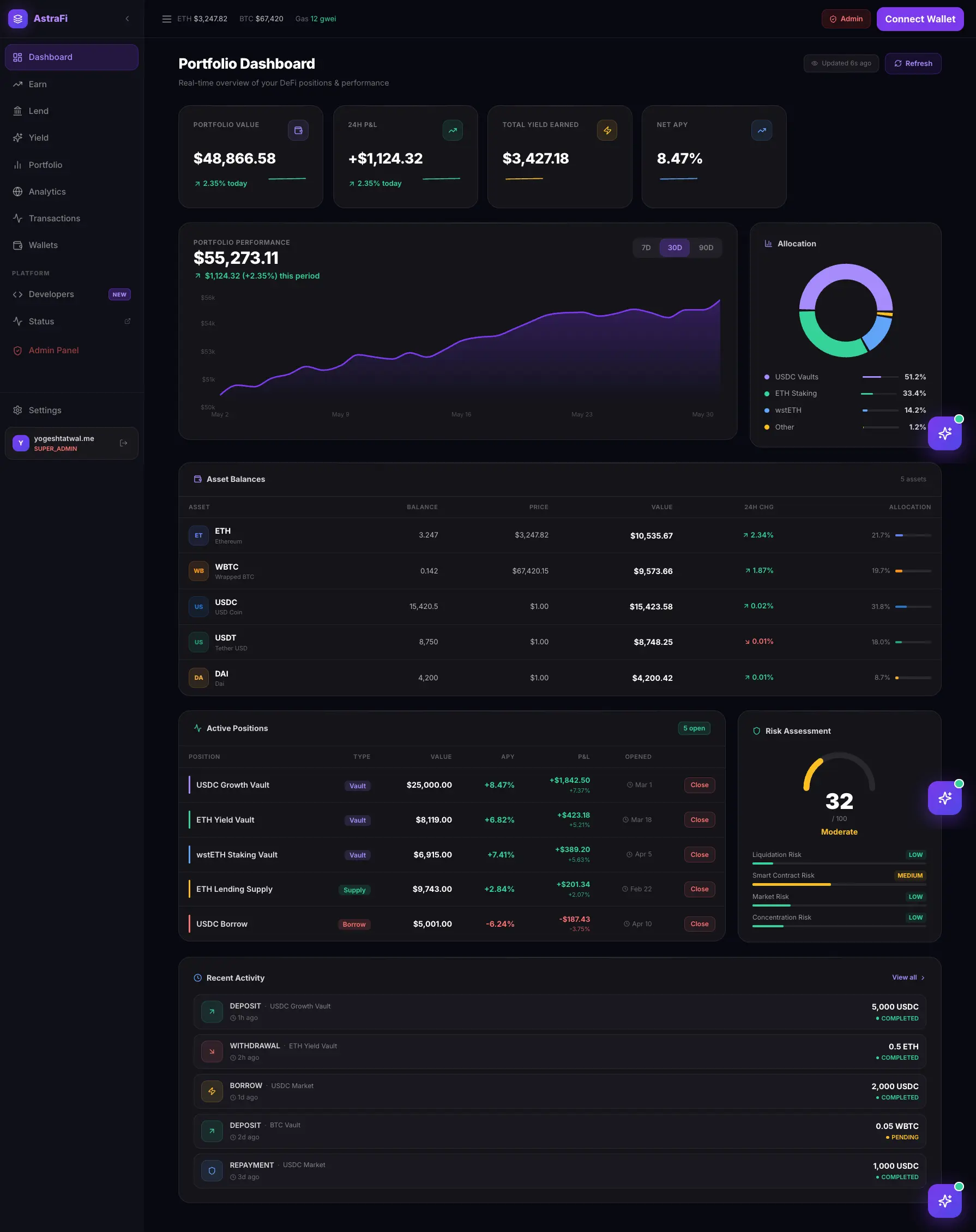
Trading Dashboard
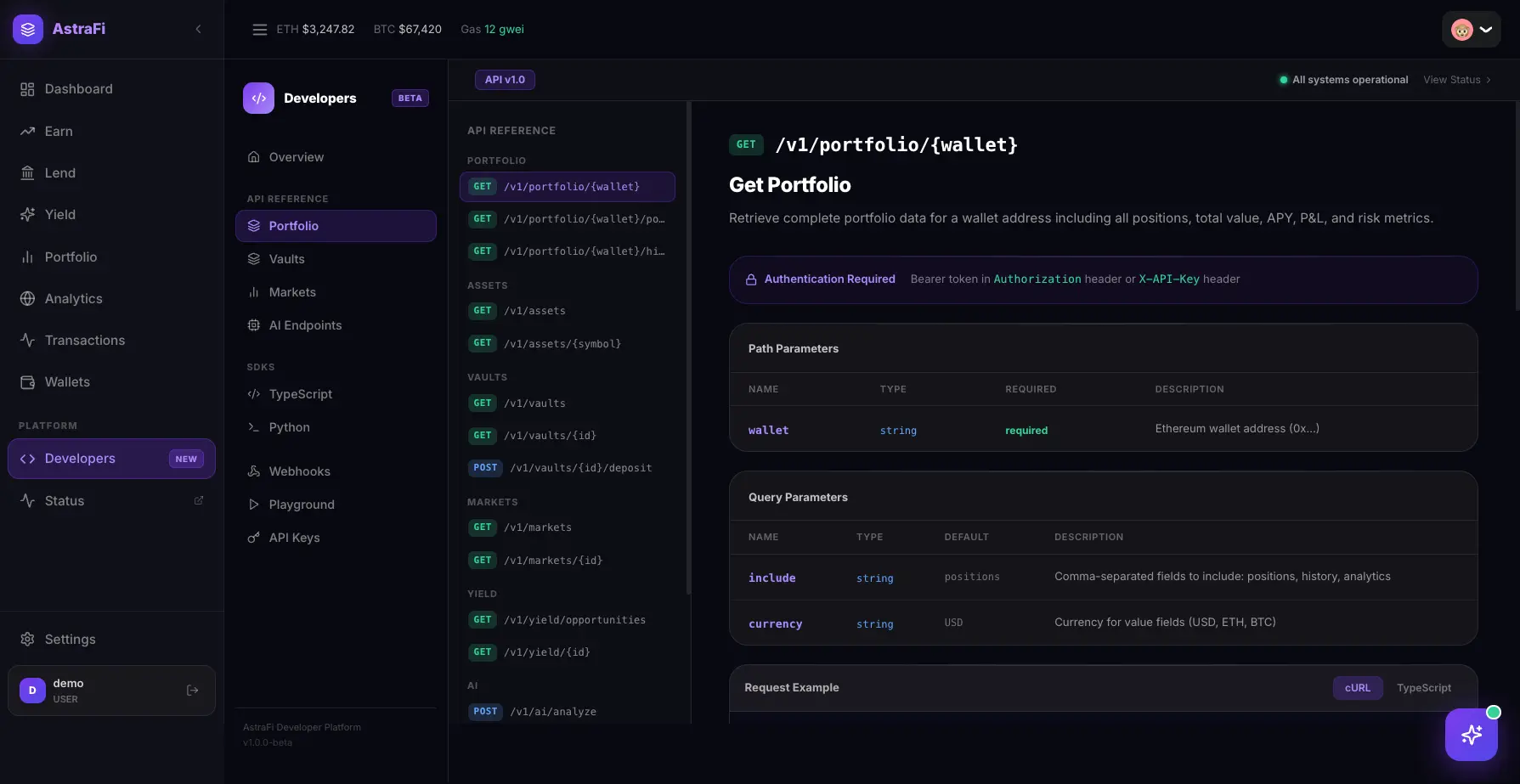
API Infrastructure
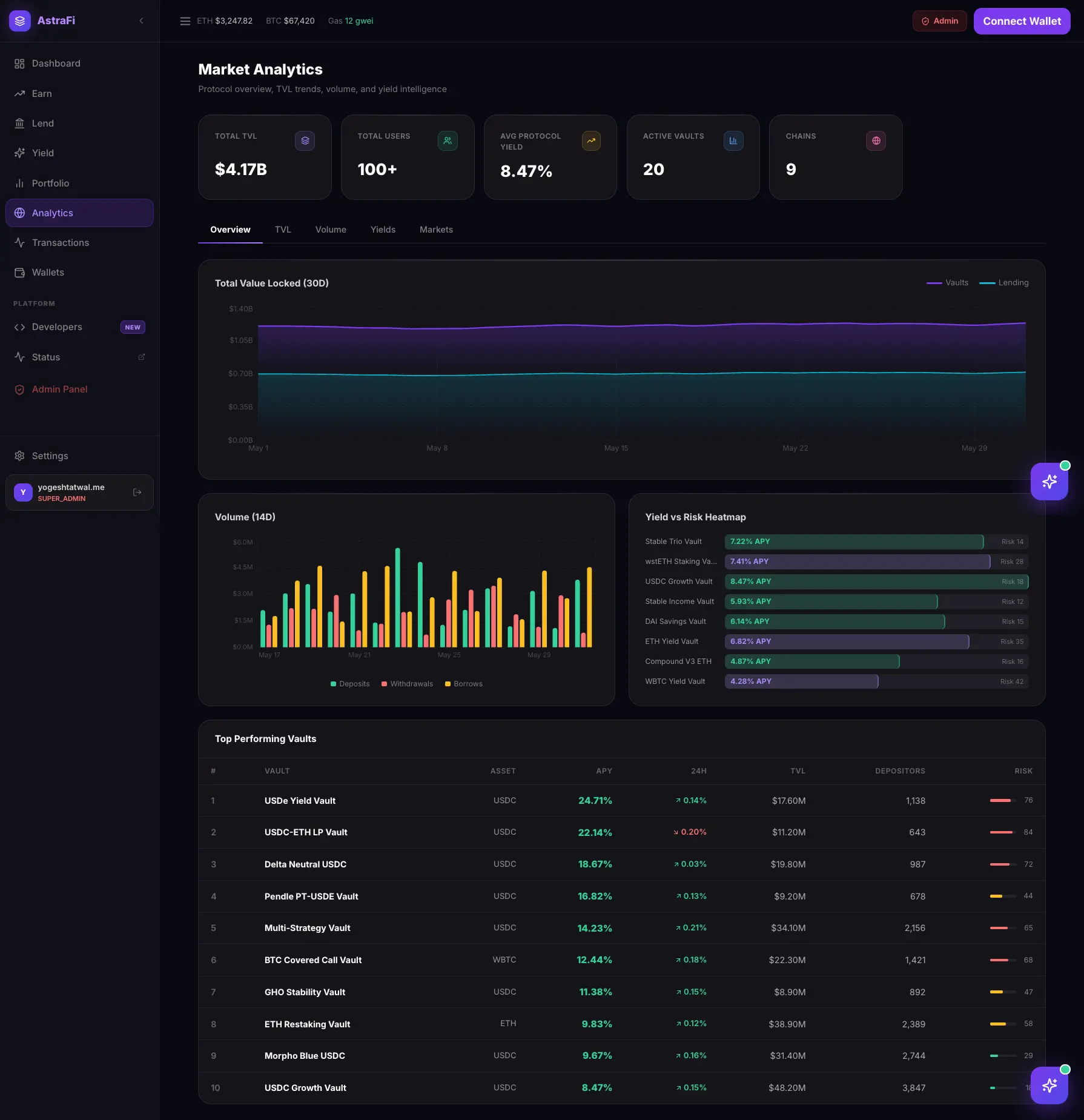
Analytics Engine
Results
What We Delivered
Lessons Learned
What We Improved
Compliance as Architecture
Designing audit trails and KYC flows into the core data model from day one prevented a costly retrofit during the final compliance review.
Protocol Risk Surface
Integrating 20+ DeFi protocols exposed unexpected API inconsistencies. A protocol abstraction layer with circuit breakers became critical — adding it retroactively would have tripled integration time.
Gas Optimization at Scale
Gas costs that seem trivial in testing become significant at institutional volume. Batching on-chain operations reduced gas spend by 62% without changing functionality.
Work With Halkwinds
Build Something Exceptional
Partner with the team that built AstraFi.