Case Study — CareAxis
How We Built CareAxis
CareAxis is a full-stack healthcare operating system purpose-built for hospitals, health systems, and digital health organizations. It unifies clinical operations, AI-powered diagnostics, telemedicine, revenue cycle management, and population health into a single HIPAA-compliant platform — replacing fragmented point solutions with one coherent system.
Project Timeline
From Discovery to Launch
Discovery
6-week embedded clinical and operational discovery across inpatient and ambulatory settings. Mapped 14 system touchpoints and defined unified data model.
Architecture
HIPAA compliance architecture, FHIR-native data model, Kafka streaming infrastructure, and AI model pipeline designed before application development.
Development
20-week build: AI Command Center with 6 clinical models, telemedicine module, RCM automation, population health tools, and executive dashboards.
Integration & Testing
SMART on FHIR Epic integration, clinical validation of AI models, HIPAA audit, penetration testing, and clinical workflow testing across 3 facilities.
Go-Live
Phased deployment across 3 facilities. Zero patient safety incidents. Full data continuity from legacy systems. All 14 prior systems decommissioned.
Discovery
6-week embedded clinical and operational discovery across inpatient and ambulatory settings. Mapped 14 system touchpoints and defined unified data model.
Architecture
HIPAA compliance architecture, FHIR-native data model, Kafka streaming infrastructure, and AI model pipeline designed before application development.
Development
20-week build: AI Command Center with 6 clinical models, telemedicine module, RCM automation, population health tools, and executive dashboards.
Integration & Testing
SMART on FHIR Epic integration, clinical validation of AI models, HIPAA audit, penetration testing, and clinical workflow testing across 3 facilities.
Go-Live
Phased deployment across 3 facilities. Zero patient safety incidents. Full data continuity from legacy systems. All 14 prior systems decommissioned.
The Challenge
Our client a regional health system — was operating across 14 disconnected software platforms covering EHR, billing, telemedicine, analytics, and population health. Integration maintenance consumed 3 FTEs. Clinical staff averaged 4.5 system logins per shift. Leadership had no real-time operational visibility. They needed a unified healthcare operating system built for modern care delivery.
Our Approach
How We Solved It
Clinical Workflow Discovery
We embedded with clinical, operational, and IT teams across inpatient and ambulatory settings for six weeks mapping every workflow, system touchpoint, and data dependency. This revealed the exact integration seams that a unified platform needed to resolve.
HIPAA Compliance Architecture
Before writing application code, we designed the compliance architecture: encryption at rest and in transit, RBAC with clinical role granularity, complete audit logging, and FHIR R4 interoperability. HIPAA was built in, not retrofitted.
AI Command Center Development
We trained and deployed clinical AI models for risk stratification, sepsis early warning, readmission prediction, and diagnostic decision support — surfacing them in a unified Command Center accessible to all clinical roles.
Modular Platform Build
CareAxis was built as a modular platform: each clinical module (telemedicine, RCM, population health, EHR) was developed independently with shared data models enabling phased deployment without clinical disruption.
EHR Integration & Go-Live
Integrated with Epic using SMART on FHIR and CDS Hooks. Executed a phased go-live across 3 facilities, migrating clinical workflows with zero patient safety incidents and full data continuity.
Engineering Process
How We Built It
FHIR Native Data Model
Built the entire data model on HL7 FHIR R4 from day one enabling seamless EHR integration and future interoperability with any FHIR-compliant system.
Real-Time Clinical Streaming
Used Apache Kafka to stream clinical events across modules in real time enabling the AI Command Center to surface alerts within seconds of clinical status changes.
Role-Specific UX Design
Designed separate UX layers for clinicians, administrators, and executives each optimized for their workflow cadence and decision-making context.
Architecture Decisions
Key Technical Choices
Unified Data Layer over Siloed Databases
Chose a shared FHIR-native PostgreSQL data layer with module-level access controls over separate databases per module enabling cross-module AI insights without ETL pipelines.
SMART on FHIR for EHR Launch
Implemented SMART on FHIR app launch so CareAxis modules can be embedded directly in the Epic workflow eliminating context-switching for clinicians.
Event-Driven AI Alerting
Deployed AI models as event consumers on the Kafka stream rather than batch jobs enabling sub-30-second alert latency for time-sensitive clinical signals.
Platform Walkthrough
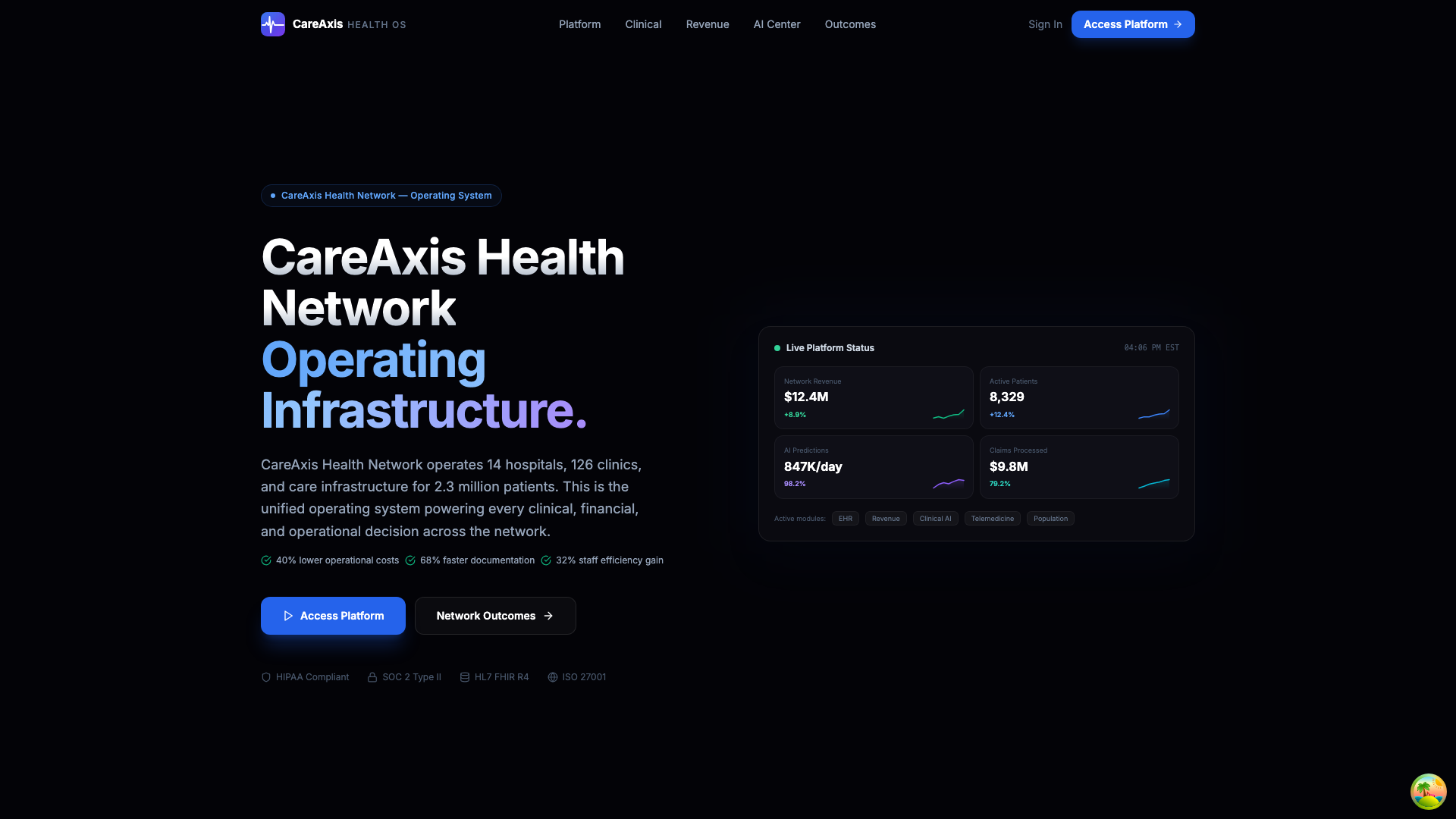
Platform Homepage
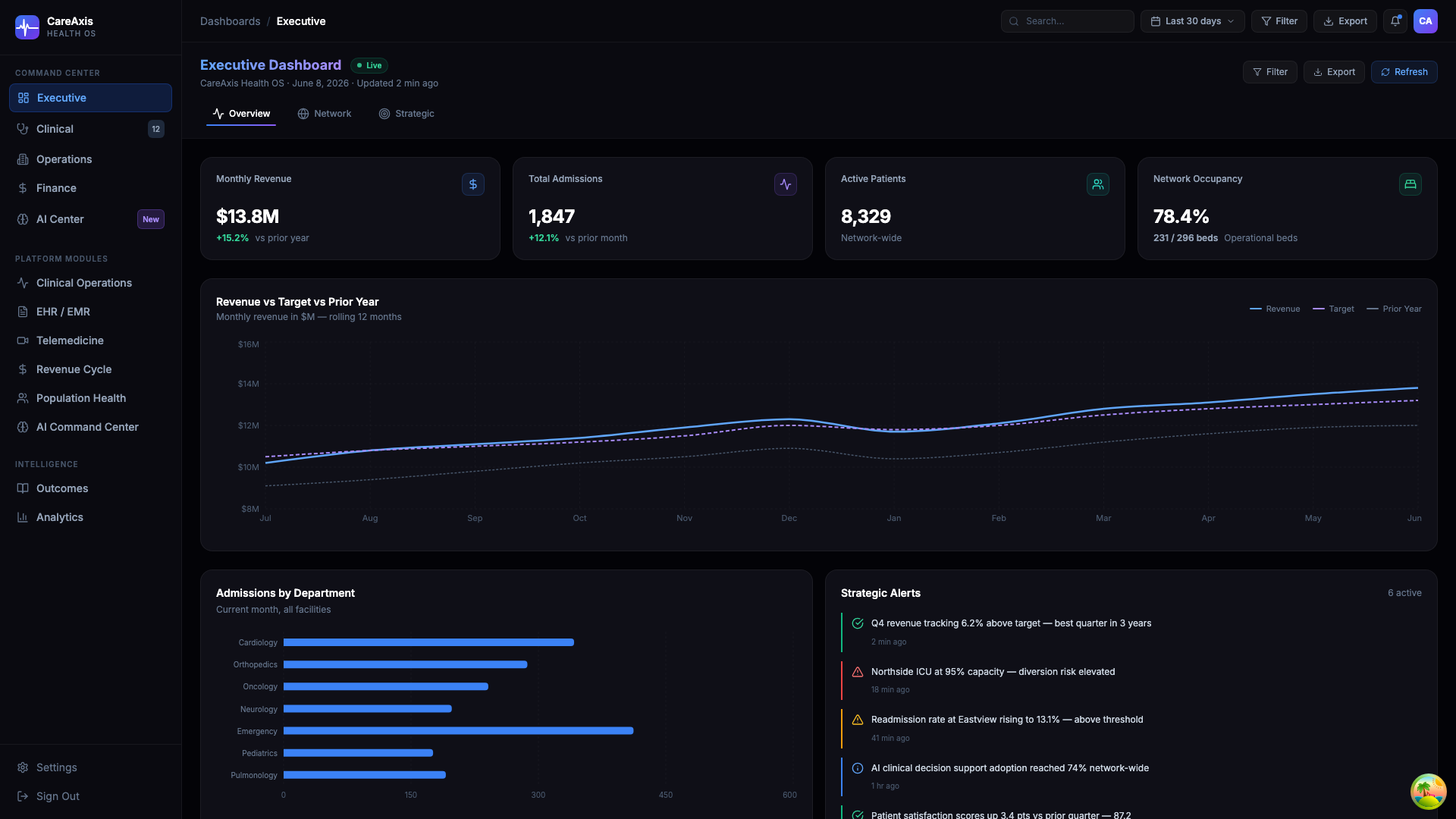
Executive Dashboard
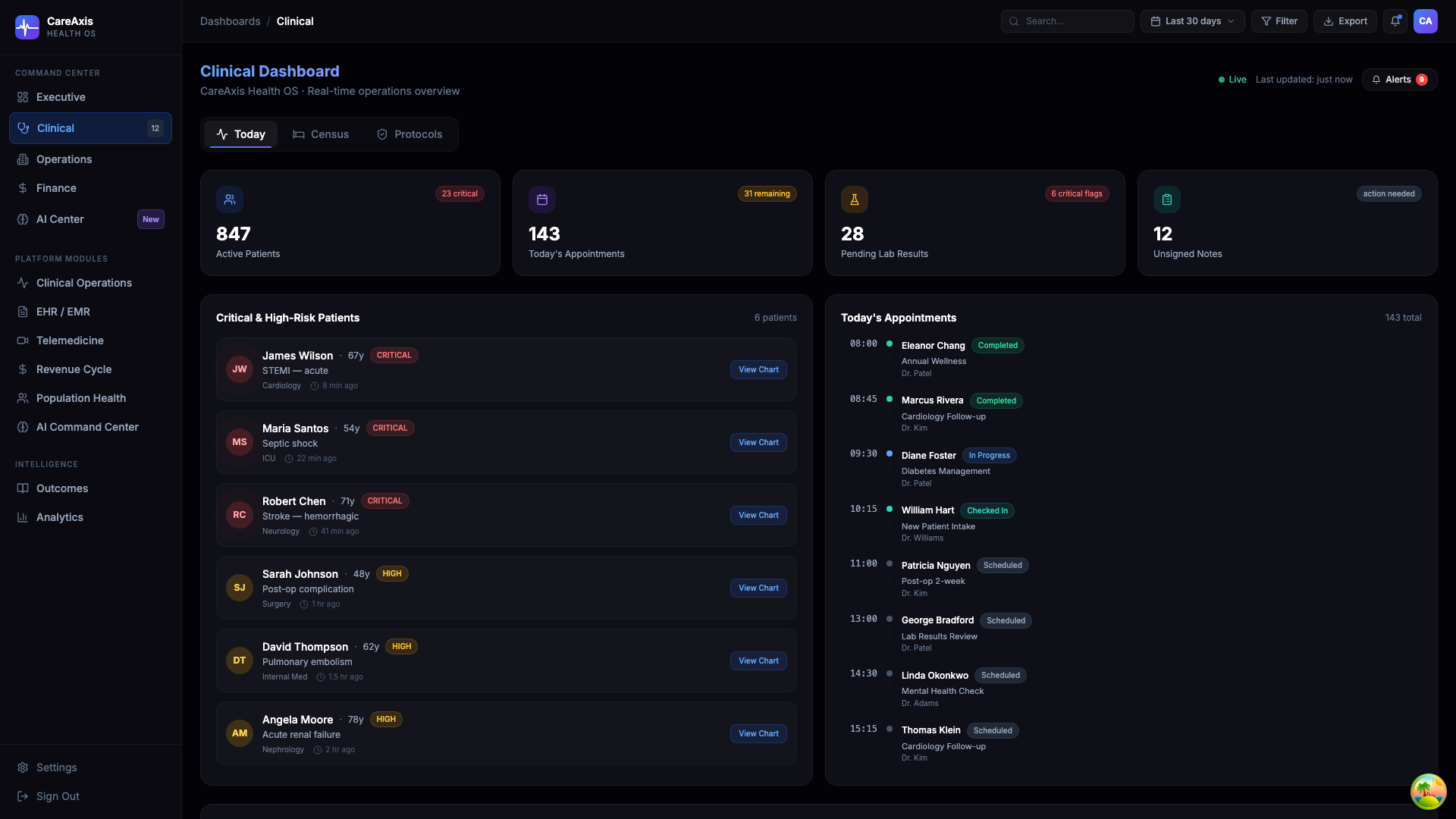
Clinical Dashboard
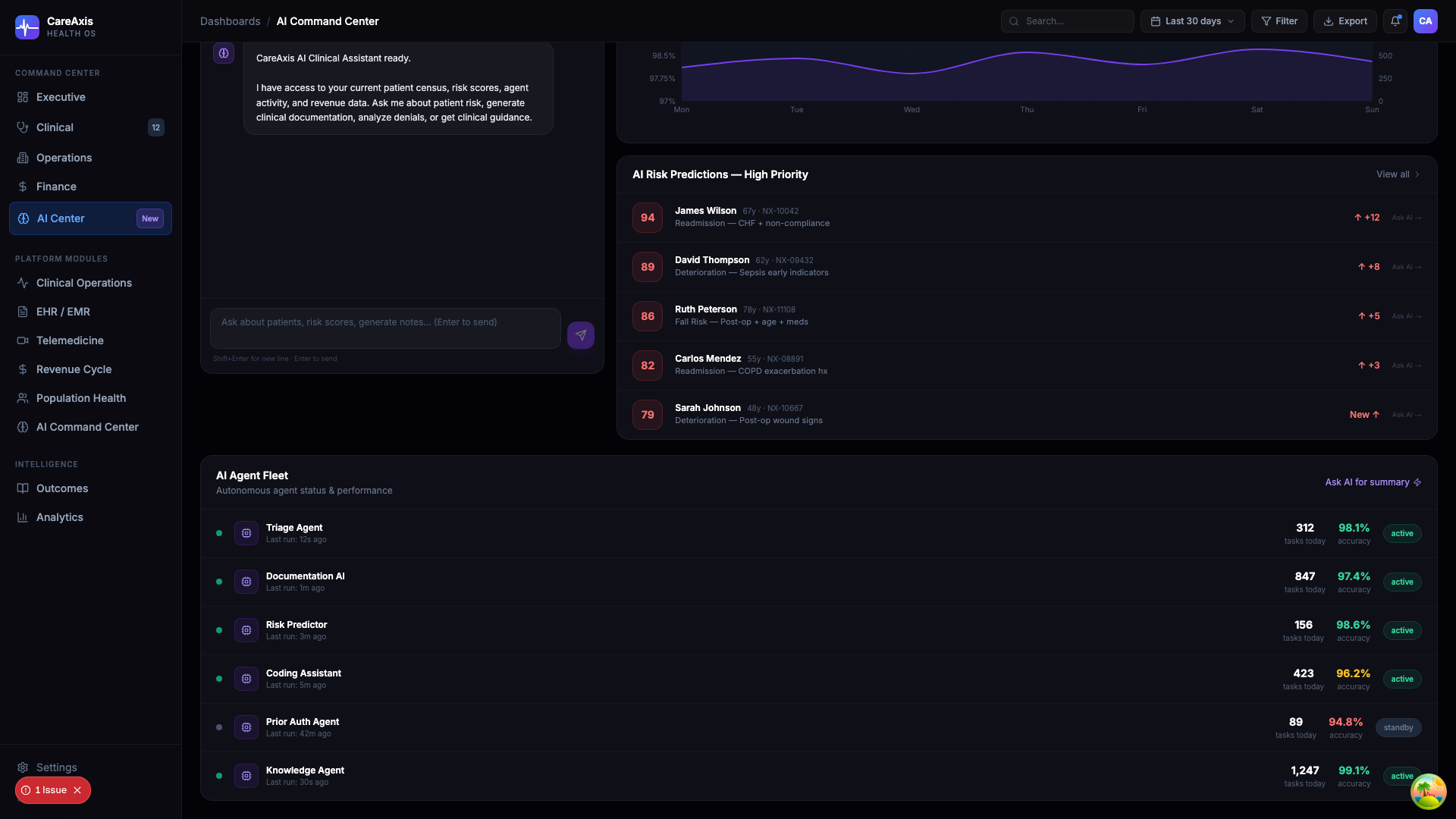
AI Command Center
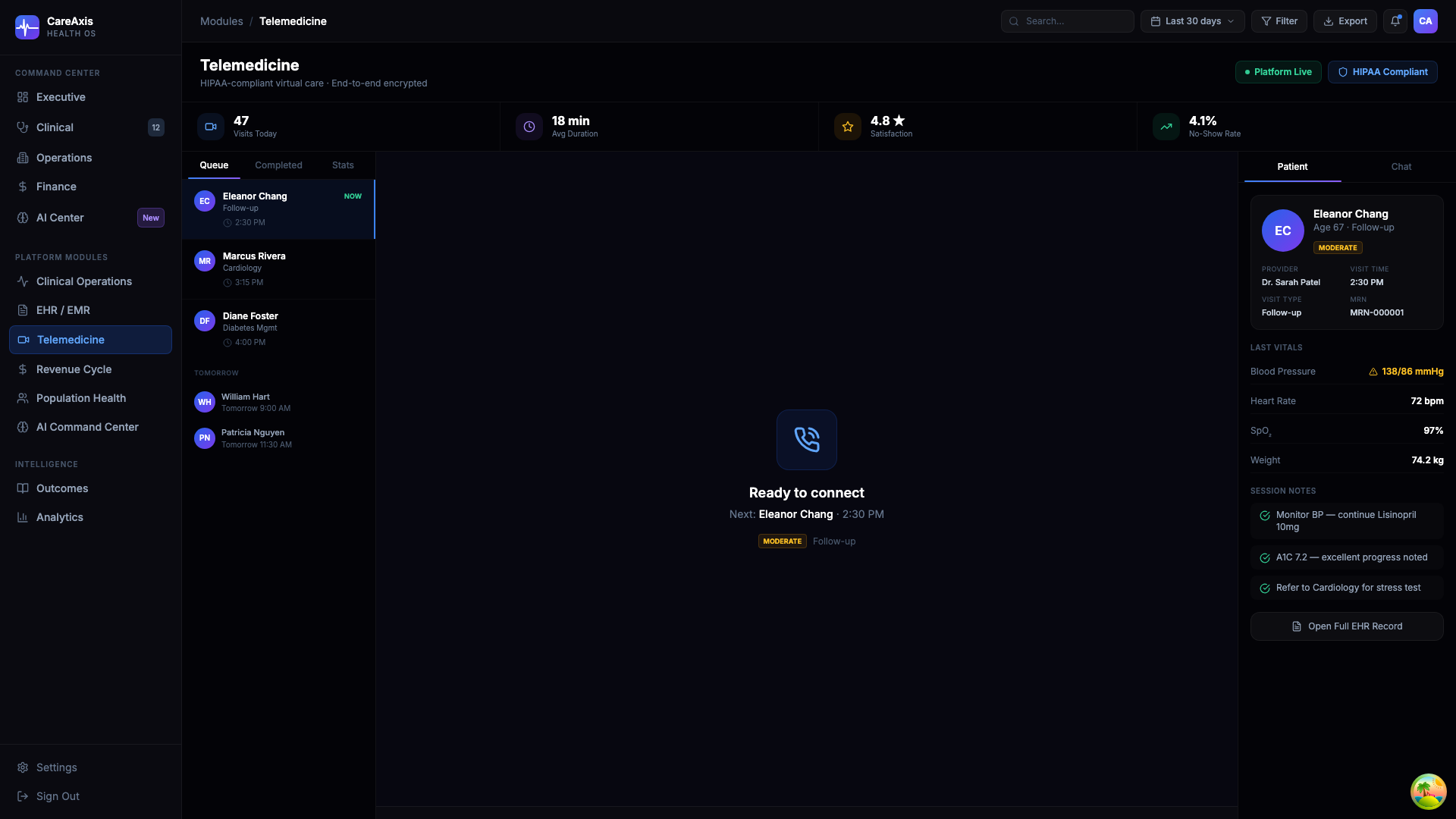
Telemedicine
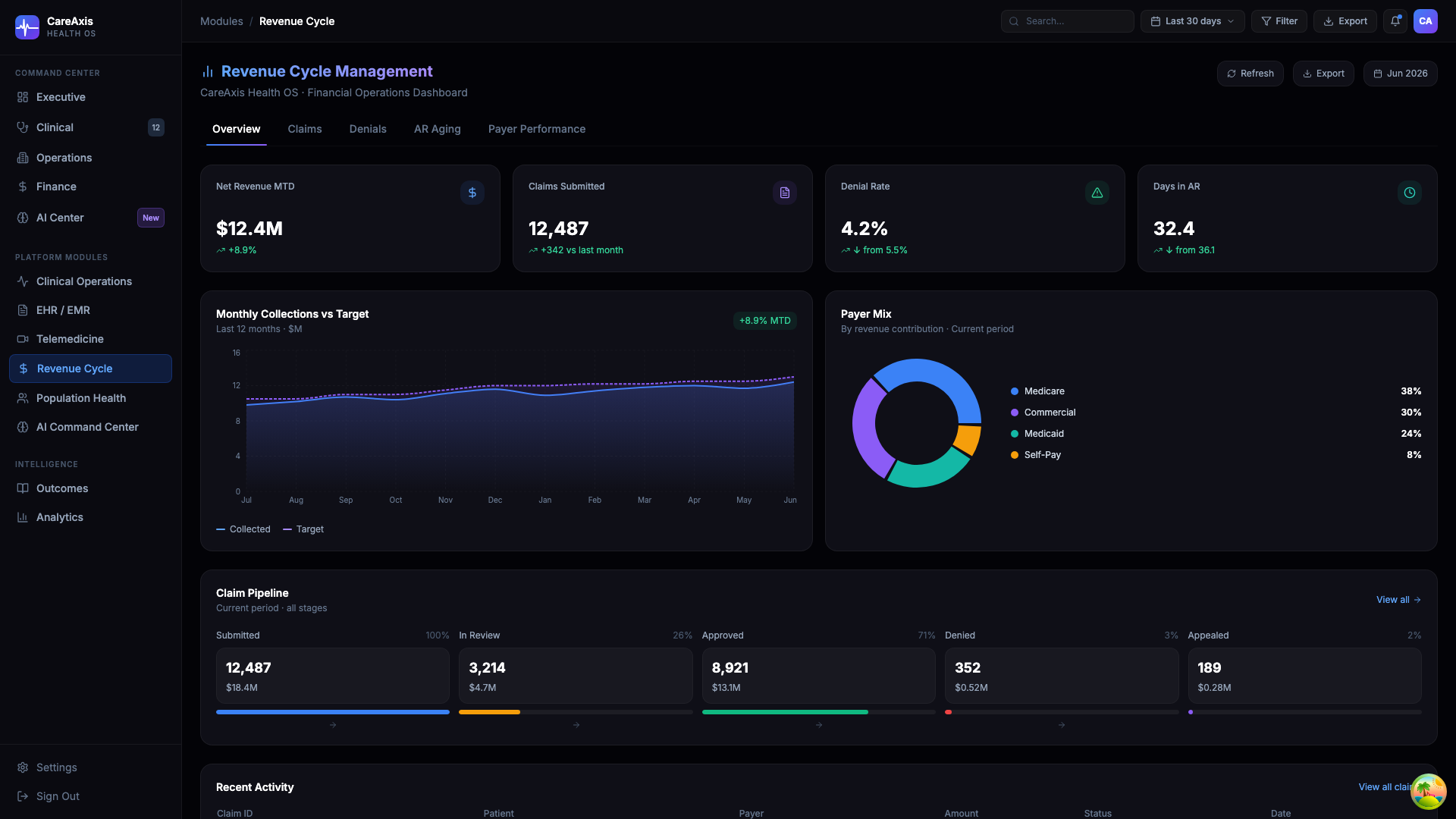
Revenue Cycle
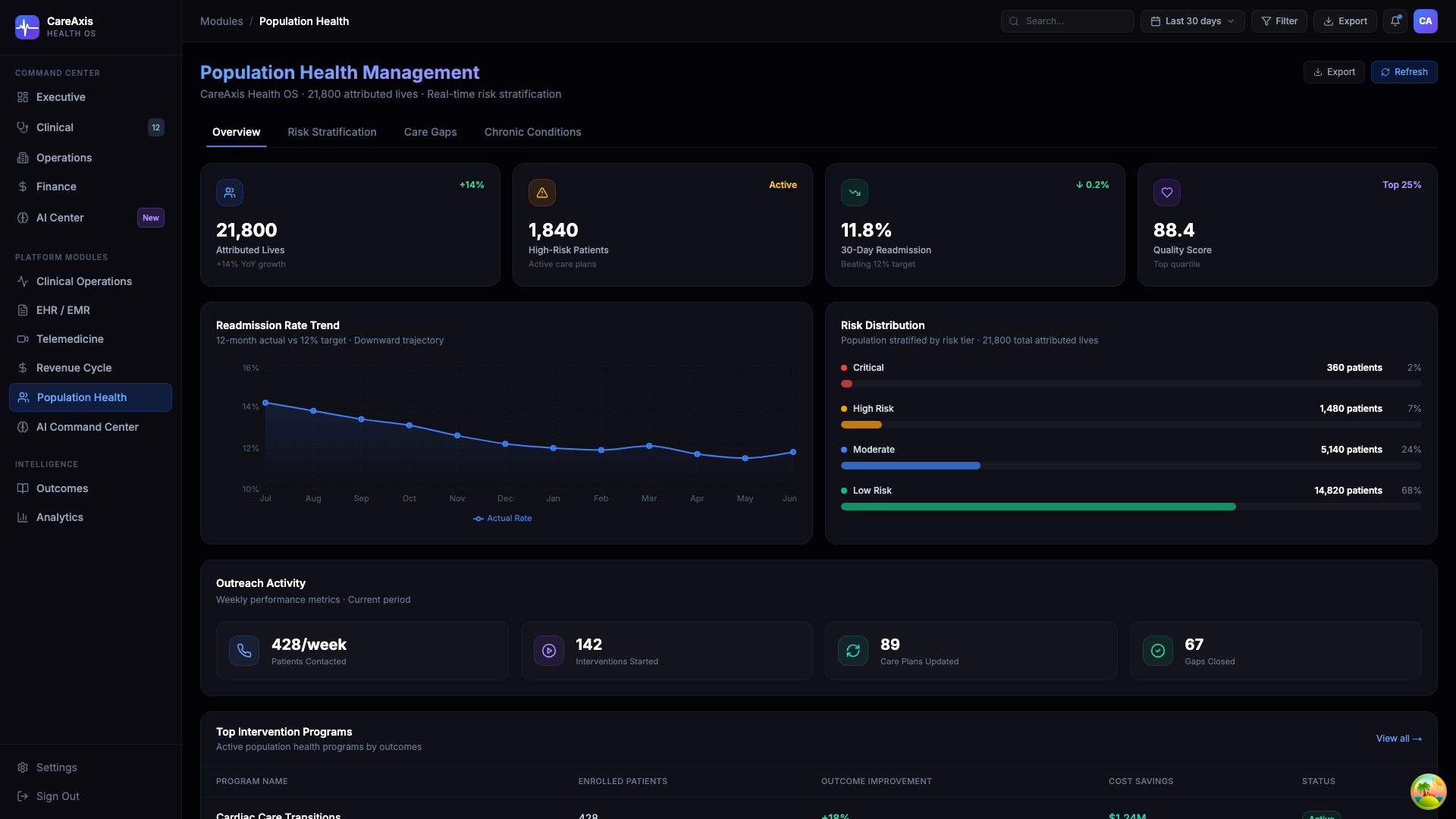
Population Health
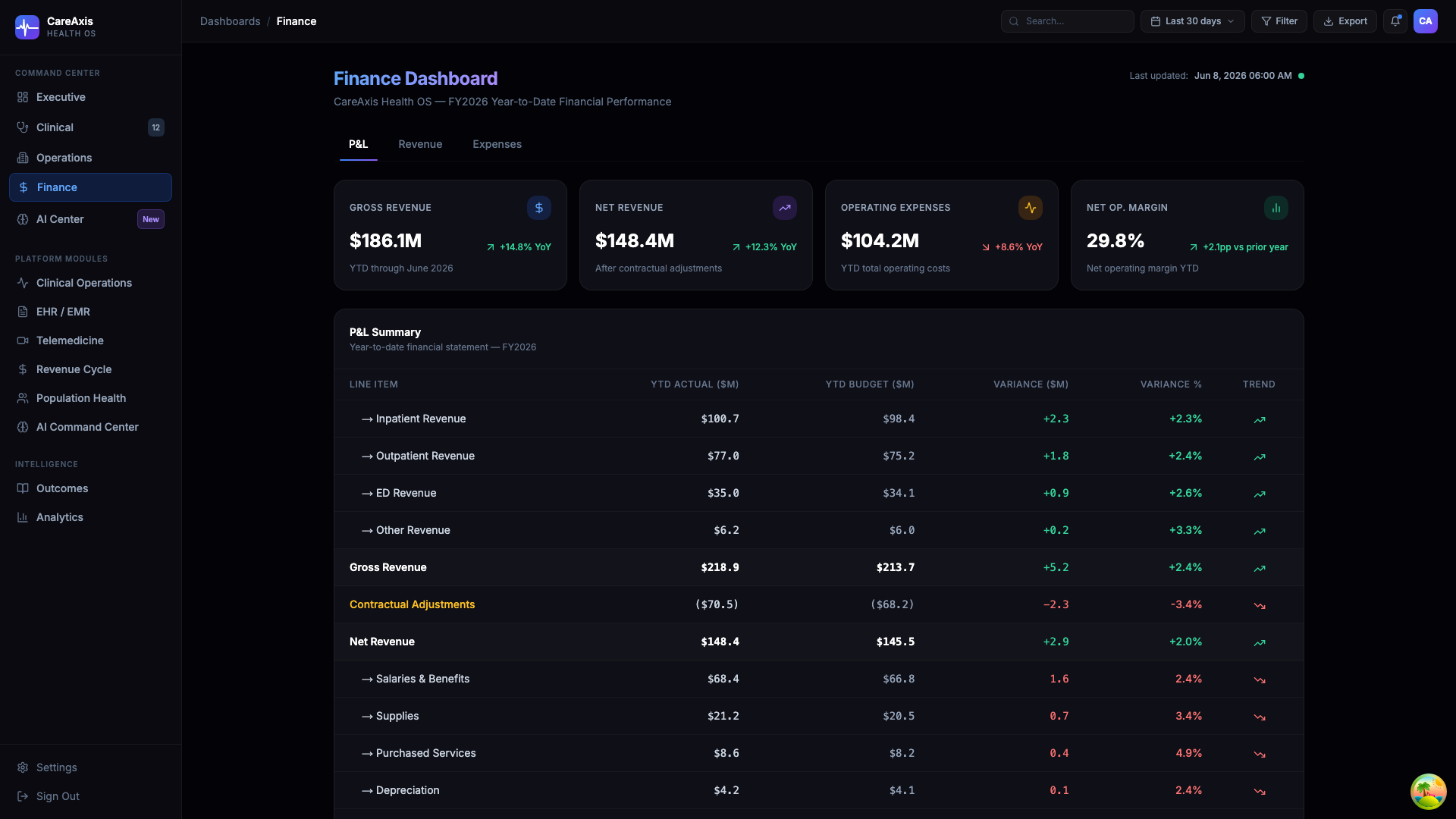
Finance Dashboard
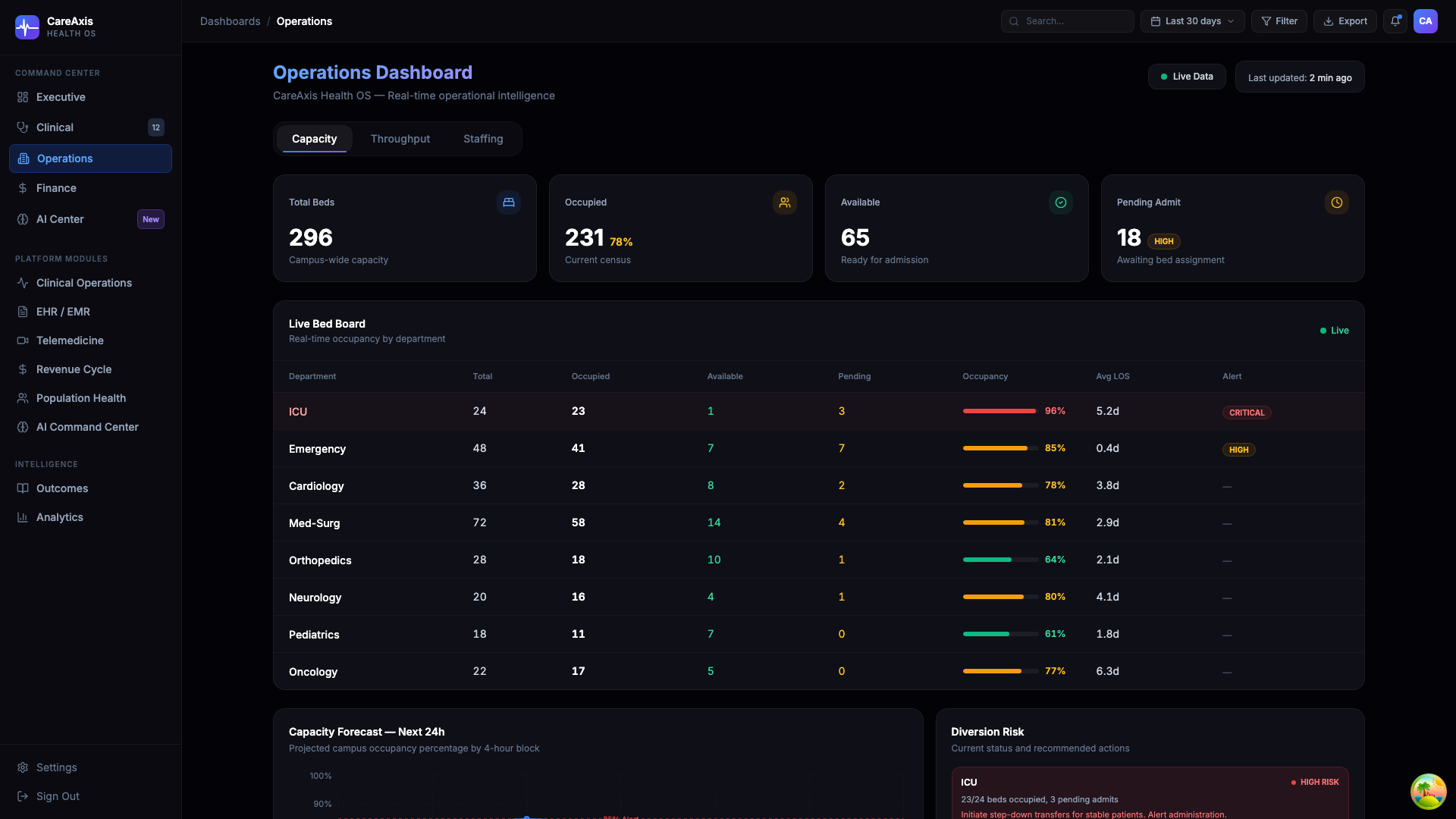
Operations Dashboard
Results
What We Delivered
Lessons Learned
What We Improved
Clinical Discovery Investment
Six weeks of embedded discovery prevented months of rework. Clinical workflow complexity cannot be modeled from documentation alone — you need to observe it.
FHIR from Day One
Starting with a FHIR-native data model eliminated the integration retrofitting that kills healthcare software timelines. Every module spoke FHIR natively from the first line of code.
AI Alerting Thresholds
Initial AI alert thresholds generated excessive noise. Clinical input during shadow-mode validation was essential to calibrate thresholds that clinicians trusted and acted on.
Work With Halkwinds
Build Something Exceptional
Partner with the team that built CareAxis.