Written by
Halkwinds Editorial Team
Halkwinds Research & Editorial
AI in Education: Personalized Learning Systems
How AI adaptive learning, intelligent tutoring, automated assessment, and early intervention systems are delivering measurably better learning outcomes at scale.
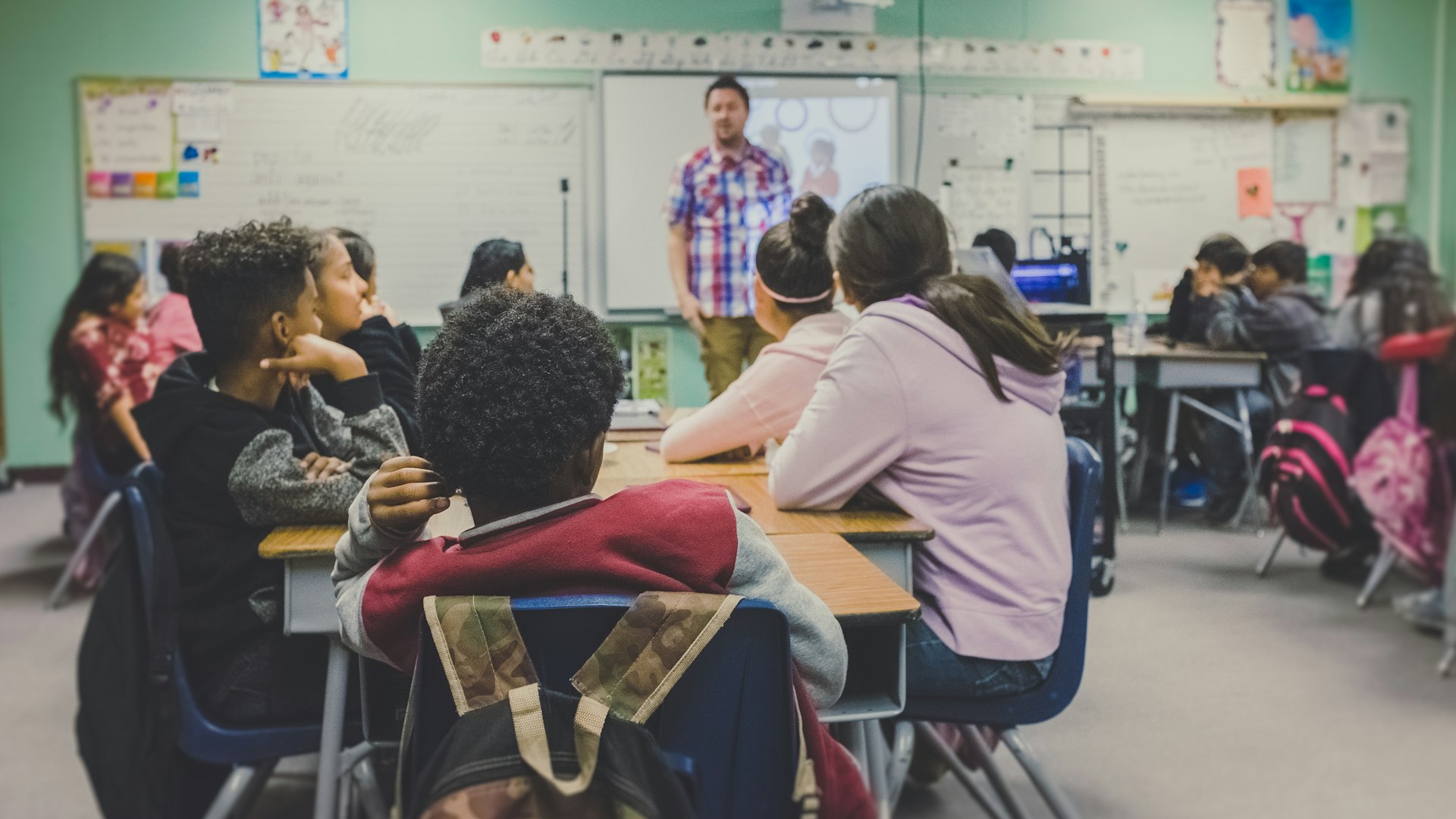
Education has been technology's longest-standing broken promise. Computers were going to transform learning in the 1990s. E-learning was going to replace classrooms in the 2000s. MOOCs were going to democratize elite education in the 2010s. None of these transitions happened as predicted, for the same reason: they delivered content more efficiently, but learning is not fundamentally a content delivery problem. It is a personalization, engagement, and feedback problem — and that is precisely what AI is equipped to address in ways previous technology waves were not.
Table of Contents
- What Makes AI Different for Education
- Adaptive Learning and Personalized Curriculum
- Intelligent Tutoring Systems
- Automated Assessment and Feedback
- Early Intervention and Student Success Prediction
- Administrative Automation
- AI in Corporate Learning and Development
- Ethical Considerations
- Implementation for Educational Organizations
- FAQs
Key Takeaways
- Adaptive learning systems that personalize content difficulty, pacing, and modality to individual learners consistently produce 20–40% better learning outcomes than one-size-fits-all approaches in controlled studies
- AI tutoring systems available 24/7 effectively provide the "immediate feedback on every attempt" that research identifies as a primary driver of learning efficiency
- Early intervention prediction models reduce dropout rates by 15–30% in higher education deployments by identifying at-risk students before they disengage
- Corporate L&D applications of AI — personalized training paths, automated competency assessment, just-in-time knowledge delivery — deliver stronger ROI than institutional education deployments because the business impact is more directly measurable
What Makes AI Different for Education
Previous educational technology augmented content delivery: the LMS delivered course materials, video replaced lectures, interactive software provided practice problems. AI augments the feedback loop — the mechanism by which learners receive information about their understanding and adjust accordingly. Humans learn best with immediate, specific, actionable feedback on every attempt. Human instructors cannot provide this at scale; AI can.
The second difference is personalization. A skilled human tutor adapts to the learner — adjusting explanation style, identifying misconceptions, providing examples that connect to the learner's context. AI tutoring systems are beginning to do this at scale, not with the depth of an expert human tutor, but with the consistency and availability that human tutors cannot provide across thousands of students. See also our discussion of generative AI applications across industries.
Adaptive Learning and Personalized Curriculum
Adaptive learning systems continuously assess learner understanding and adjust: what content is presented next, at what difficulty level, in which format, and with how much scaffolding. The system builds a model of each learner's knowledge state — what concepts are mastered, which are partially understood, which have been attempted and failed — and uses this model to select the optimal next learning experience.
The evidence base for adaptive learning is strong. McGraw-Hill's ALEKS system, which has been in use in mathematics education for over 20 years, consistently shows students learning 2x faster with adaptive instruction than with traditional textbook-based courses. More recent AI adaptive systems show similar results across a broader range of subjects. The key mechanism is time efficiency: learners are never practicing material they already know, and they are never stuck on material beyond their current zone of proximal development.
Intelligent Tutoring Systems
Intelligent Tutoring Systems (ITS) provide conversational, one-on-one tutoring at scale. A learner working through a problem receives hints and guidance calibrated to where they are stuck, not a fixed set of hints. If a student makes a conceptual error — not just a computational error — the system identifies the underlying misconception and addresses it specifically. If a student consistently struggles with a particular problem type, the system generates additional practice targeted at that weakness.
Large-scale deployments of ITS in K-12 and higher education have produced effect sizes of 0.3–0.8 standard deviations above control conditions — a meaningful and consistent improvement that translates to months of additional learning progress per year. The tutoring availability effect is also significant: students who would not seek human tutoring (due to cost, stigma, or time constraints) engage freely with AI tutors, extending the population that benefits from personalized instruction.
Automated Assessment and Feedback
Assessment is one of the highest-labor activities in education: grading essays, evaluating written responses, and providing feedback on constructed responses all require significant instructor time. AI automated assessment systems have reached a level of quality on many assessment types that is acceptable for formative feedback:
- Short-answer assessment: NLP-based scoring that evaluates conceptual content, not just surface features, achieves inter-rater reliability comparable to human graders for structured short-answer items
- Essay evaluation: AI writing assessment tools evaluate argument structure, evidence use, coherence, and mechanics — providing detailed feedback that helps students improve, not just a grade
- Code evaluation: Automated code assessment systems evaluate correctness, style, efficiency, and test coverage for programming assignments — providing immediate, specific feedback on every submission
Early Intervention and Student Success
The students most at risk of dropping out are often not visible as struggling in early weeks — the signal emerges in engagement data (LMS activity, assignment submission patterns, course access frequency) before it appears in grades. AI models trained on historical student data can identify at-risk students 6–8 weeks before traditional academic monitoring would flag them, enabling proactive intervention when it can still be effective.
Higher education institutions with deployed AI early warning systems report 15–30% reduction in course failure rates among identified at-risk students who received proactive outreach. The ROI in terms of student retention — each retained student represents $15K–$60K in tuition revenue — makes this one of the clearest financial cases for educational AI.
AI in Corporate Learning and Development
Corporate L&D is arguably the domain where AI delivers the clearest ROI in education — because the learning outcome is directly connected to business performance. AI L&D applications include:
- Skills gap analysis: AI models that map current employee competencies against role requirements and strategic skill needs, generating personalized development recommendations
- Just-in-time learning: AI systems that surface relevant learning content in the workflow context where it is needed — the employee asking a question gets a curated answer plus a related learning module
- Simulation and practice: AI-powered role-play simulations for sales, customer service, and management skills — practice environments where employees can make mistakes and learn without real consequences
- Learning impact measurement: Correlating L&D activity with performance outcomes, identifying which learning investments drive business results
Our custom AI solutions include L&D platform development for organizations building proprietary learning experiences on their specific content and competency frameworks. Talk to our team about your L&D AI requirements.
Frequently Asked Questions
Does AI tutoring replace human teachers?
No, and the evidence is clear on why not. Human teachers provide motivation, relationship, social learning facilitation, and mentorship that AI cannot replicate. The most effective educational AI implementations augment teachers — handling individualized practice and formative feedback at scale, freeing teacher time for the high-value human activities where teachers are irreplaceable.
What are the data privacy considerations for AI in K-12 education?
Significant. FERPA in the US, GDPR in Europe, and various state laws govern student data collection, use, and sharing. AI educational systems must be designed with student privacy as a primary constraint, not an afterthought. Key requirements: data minimization (collect only what is needed for learning), purpose limitation (data collected for learning is not used for advertising or other purposes), parental consent for data collection from minors, and data deletion rights. COPPA applies for students under 13.
How do you measure the effectiveness of AI learning tools?
The gold standard is randomized controlled trials: randomly assign learners to AI-enhanced and traditional conditions and measure learning outcomes on common assessments. In practice, most deployments use quasi-experimental designs: comparing learning gains for students using AI tools versus comparable students not using them, controlling for prior achievement, demographics, and other factors. Learning gain per hour of study time is a practical efficiency metric.
Is AI academic dishonesty a significant concern?
Yes. The proliferation of capable AI writing tools has changed the academic integrity landscape in ways that institutions are still working through. The emerging consensus among educators is that assessment redesign — moving toward evaluated artifacts that demonstrate understanding in ways that AI cannot replicate — is more durable than AI detection tools (which are imperfect and create false accusations). The challenge is greatest in writing-heavy, summative assessment contexts.
Explore Further