Written by
Halkwinds Editorial Team
Halkwinds Research & Editorial
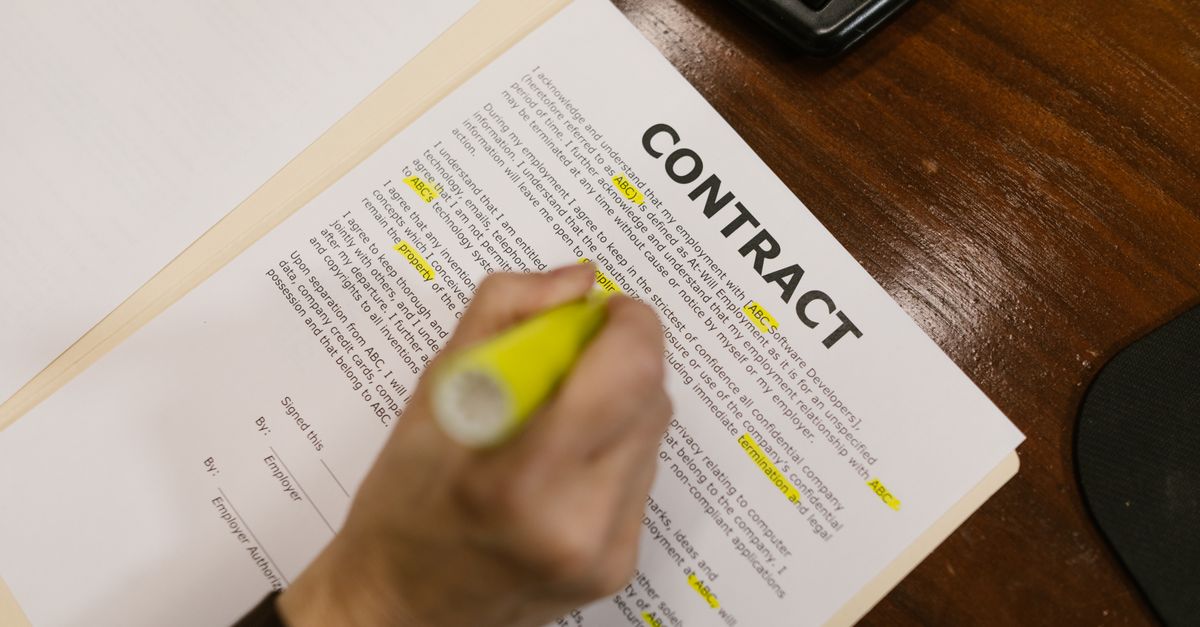
AI in Legal: Contract Analysis, Compliance, and Due Diligence
How law firms and legal teams are using AI to review contracts, flag risks, and accelerate due diligence — implementation patterns and risks.
Legal teams and law firms sit on mountains of unstructured text — contracts, NDAs, regulatory filings, litigation documents, and vendor agreements — most of it locked in PDFs and Word files that no one has time to read carefully. For an IT director supporting a legal department or a firm's practice groups, the pressure is clear: legal wants faster contract turnaround and better risk visibility, security wants nothing leaking to a public model, and finance wants to know why review costs keep climbing. AI-powered contract analysis sits squarely at the intersection of these demands. This article walks through how AI legal contract analysis actually works, the architecture patterns that hold up in production, and the operational realities you need to plan for before you sign a vendor contract or start building.
- Background / Why This Matters
- Core Concepts and Architecture
- Implementation Strategy
- Scaling and Operational Considerations
- Common Mistakes / What to Avoid
- Frequently Asked Questions
- Conclusion
Background / Why This Matters
Contract review has traditionally been one of the most labor-intensive and least scalable activities in legal work. A single M&A due diligence exercise might require associates to read thousands of agreements looking for change-of-control clauses, assignment restrictions, or unusual indemnification terms. The work is repetitive, error-prone when done at speed, and expensive when billed at associate or paralegal rates.
Three shifts have made AI genuinely useful here rather than a novelty:
- Large language models can now reason over legal language. Models from OpenAI (GPT-4o, o-series) and Anthropic (Claude) can extract clauses, summarize obligations, and compare terms against a playbook with accuracy that was impossible with older rules-based or bag-of-words classifiers.
- Long context windows changed the game. Claude and GPT models now handle 100K–200K+ tokens, meaning an entire master services agreement plus its amendments can fit in a single prompt without brittle chunking.
- Purpose-built legal tools emerged. Platforms like Harvey AI package legal-specific workflows, and traditional vendors such as Kira, Luminance, and DocuSign's CLM have added generative features on top of existing extraction engines.
Research and industry surveys consistently suggest that contract review and due diligence are among the top AI use cases adopted by legal departments — not because AI replaces lawyers, but because it removes the first-pass reading burden and lets attorneys focus on judgment calls.
Takeaway: The value is not "AI writes contracts." The value is compressing the review-and-flag cycle from days to hours while keeping a human accountable for the final decision.
Core Concepts and Architecture
Most production AI legal contract analysis systems follow a similar pipeline, regardless of whether you buy or build. Understanding the layers helps you evaluate vendors and estimate your own effort.
1. Ingestion and OCR
Legal documents arrive as scanned PDFs, signed originals, and email attachments. You need reliable OCR (Azure Document Intelligence, AWS Textract, or Google Document AI) to convert images to text, plus layout parsing to preserve structure — clause numbering, tables, and signature blocks matter for accurate extraction.
2. Chunking and retrieval
Even with long context windows, indexing documents into a vector store (pgvector, Pinecone, or Azure AI Search) supports semantic search across a whole contract portfolio. This is what enables questions like "show me every agreement with an auto-renewal clause longer than 12 months."
3. The reasoning layer
This is where the LLM does clause extraction, classification against a playbook, risk scoring, and summarization. The critical design decision is grounding: the model should cite the exact source text for every claim it makes, so a reviewing attorney can verify it in seconds rather than trusting an unsourced summary.
4. Human-in-the-loop review
No responsible legal AI system auto-approves. The output is a structured review interface — flagged clauses, deviations from standard positions, and confidence indicators — that a lawyer confirms or overrides.
Build vs. buy comparison
| Dimension | Buy (Harvey AI, Kira, Luminance) | Build (OpenAI/Anthropic APIs + custom stack) |
|---|---|---|
| Time to first value | Weeks — pre-trained legal models and templates | Months — pipeline, prompts, and evals from scratch |
| Customization | Limited to vendor's workflow and playbooks | Full control over clause libraries and logic |
| Data residency / security | Depends on vendor deployment options | You control tenancy, VPC, and retention |
| Per-seat / usage cost | High predictable license fees | Variable API + engineering + maintenance |
| Best fit | Firms needing fast standard workflows | Teams with unusual document types or integration needs |
Takeaway: A hybrid is common — buy a platform for standard NDA and MSA review, and build a custom pipeline for the niche, high-volume document type your business depends on. This is often where Halkwinds engagements begin: integrating a bought platform into existing systems while building targeted custom extraction where off-the-shelf tools fall short.
Implementation Strategy
The fastest way to burn credibility with your legal stakeholders is to deploy a system that hallucinates a clause that isn't there. A disciplined rollout avoids that.
Phase 1: Pick a narrow, high-volume use case
Do not start with "review all contracts." Start with one document type where you have volume and a clear right answer — for example, NDAs against a standard playbook, or vendor agreements screened for data-processing clauses. Narrow scope means you can build a real evaluation set.
Phase 2: Build an evaluation set before you build the system
Collect 50–100 already-reviewed contracts with known correct answers (which clauses were flagged, what the risk position was). This becomes your ground truth. Every prompt change, model swap, or vendor comparison is measured against it. Without evals, you are guessing whether the AI is actually accurate.
Phase 3: Ground everything in source text
Require the system to return the verbatim clause and its location for every finding. If the model claims a limitation-of-liability cap exists, an attorney should click through to the exact paragraph. This single design rule does more for trust and defensibility than any accuracy percentage.
Phase 4: Decide your model and hosting posture early
For sensitive legal data, avoid consumer endpoints. Use enterprise agreements: OpenAI via Azure OpenAI Service (data not used for training, deployed in your region), Anthropic Claude through AWS Bedrock or their enterprise API, or a vendor like Harvey AI that contractually guarantees no training on your data. Confirm data retention and subprocessor terms in writing before any pilot touches real client documents.
Phase 5: Ship to a small group with a feedback loop
Give it to a handful of associates or in-house counsel who understand it is a first-pass tool. Capture every correction. Those corrections feed back into your prompts and playbooks and expand your eval set over time.
Takeaway: Evals and source grounding are the two non-negotiables. A modest system that always shows its work beats an impressive demo that occasionally invents obligations.
Scaling and Operational Considerations
Once a pilot proves value, scaling introduces cost, latency, and governance concerns that IT directors own directly.
Cost control
Token costs add up quickly across a large portfolio. Techniques that help:
- Use smaller, cheaper models (GPT-4o mini, Claude Haiku) for extraction and routing, reserving frontier models for complex reasoning.
- Cache repeated system prompts and playbook text — Anthropic and OpenAI both offer prompt caching that meaningfully reduces cost on repetitive workloads.
- Pre-filter with retrieval so you only send relevant clauses to the expensive model, not entire 200-page agreements.
Latency and batch processing
Interactive review needs sub-minute responses; bulk due diligence across thousands of documents does not. Route bulk workloads through batch APIs (both major providers offer discounted batch tiers) and reserve real-time inference for the interactive reviewer experience.
Governance and auditability
Legal is a regulated, high-stakes domain. Log every prompt, model version, and output. If a decision is ever challenged, you need to reconstruct exactly what the system saw and produced. Version your playbooks and prompts the same way you version code.
Accuracy monitoring over time
Model providers update models, and behavior drifts. Re-run your evaluation set on a schedule and whenever you change models. A silent accuracy regression in a legal tool is a genuine liability risk.
Takeaway: Treat model outputs as auditable events. Logging, versioning, and scheduled eval runs are the operational backbone that keeps a legal AI system trustworthy at scale.
Common Mistakes / What to Avoid
- Skipping the evaluation set. Teams that deploy on vibes cannot answer "how accurate is this?" and lose stakeholder trust the first time it misses a clause.
- Ungrounded summaries. A summary without source citations forces attorneys to re-read everything, erasing the time savings and inviting hallucination risk.
- Using consumer AI tools with client data. Pasting a confidential agreement into a free chatbot can breach client confidentiality and privilege. Enterprise, contractually-controlled endpoints only.
- Treating AI output as final. Positioning the tool as a decision-maker rather than a first-pass assistant creates malpractice exposure and internal resistance.
- Over-scoping the first release. "Analyze all contract types" projects stall. Narrow use cases ship and prove ROI.
- Ignoring OCR quality. Garbage text in means garbage analysis out; poor scans quietly degrade accuracy on exactly the old documents most likely to hide problems.
Takeaway: Most failures are process failures, not model failures. Grounding, evals, secure endpoints, and human review prevent the majority of them.
Frequently Asked Questions
Explore Further