Written by
Halkwinds Editorial Team
Halkwinds Research & Editorial
Behind the Architecture of AtlasIQ
The architectural decisions, hard lessons, and engineering philosophy behind AtlasIQ — semantic-layer-first design, query pushdown, multi-tenant analytics, and anomaly detection calibration.
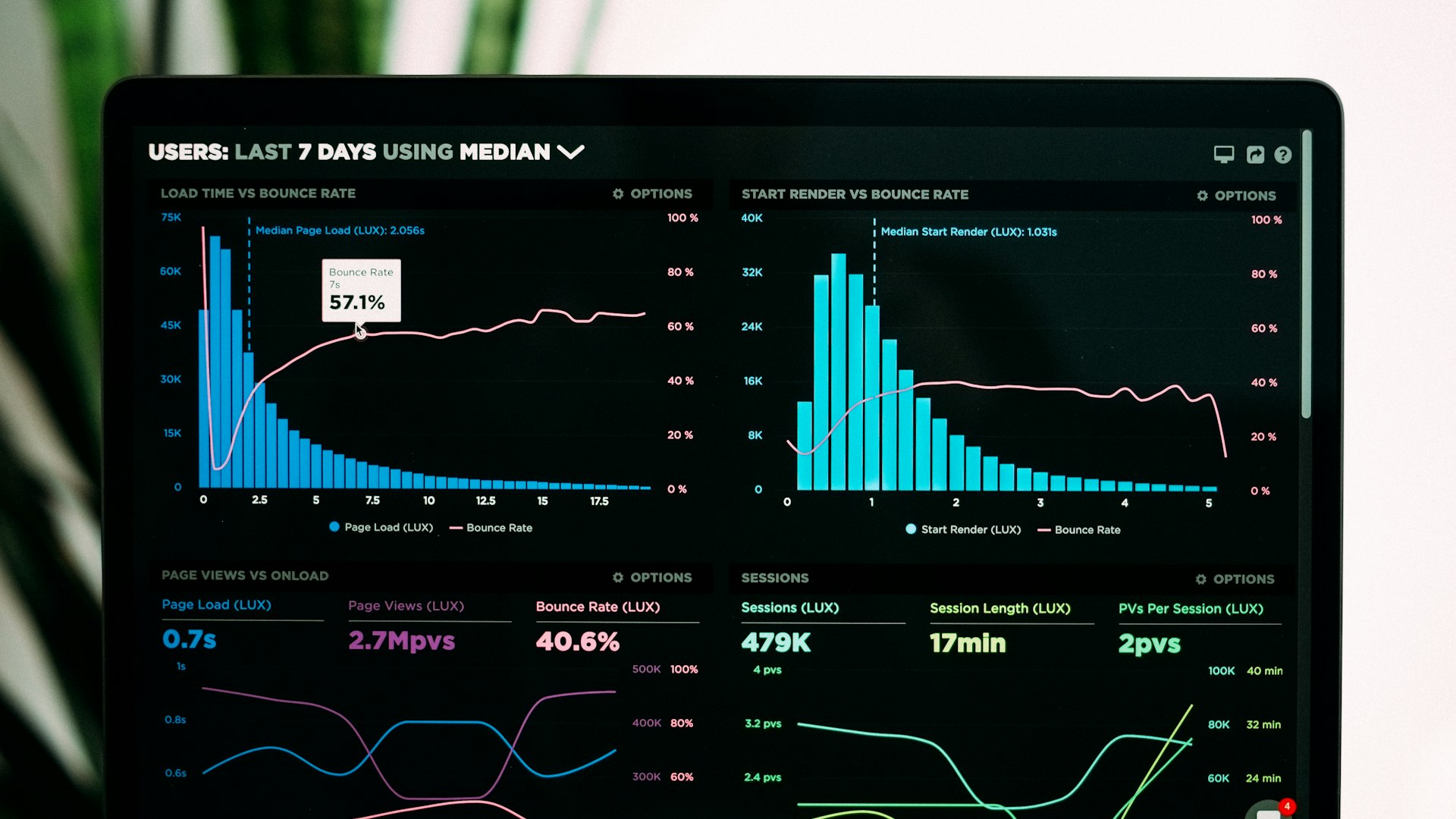
AtlasIQ was built from a specific frustration. Organizations we worked with had invested heavily in data infrastructure — data warehouses, dashboards, BI tools — but their business leaders were still not getting answers to their most important questions in time to act on them. The tooling required data literacy to use, the data pipelines required engineering to maintain, and the questions that mattered most to executives and operators were the ones that required the most complex queries. The gap between "we have data" and "we make better decisions" was not a data volume problem; it was an accessibility and intelligence problem.
Table of Contents
- The Problem We Set Out to Solve
- Core Architecture Philosophy
- The Query Intelligence Layer
- Data Connector Architecture
- Multi-Tenant Analytics: Our Approach
- Performance at Scale
- The Visualization Layer
- Security and Data Governance
- What AtlasIQ Does Today
- Engineering Lessons from Building Analytics Infrastructure
Key Takeaways
- Natural language query interfaces only work when the underlying semantic layer accurately represents the data model — the semantic layer investment is the majority of the real work
- Columnar storage and query optimization are prerequisites for interactive analytics at scale — we learned this by observing queries that took 45 seconds become 400ms with the right architecture
- Multi-tenant analytics requires a fundamentally different query execution approach than single-tenant BI — tenant isolation must be enforced at the query engine level, not just the application level
- Anomaly detection that generates noise is worse than no anomaly detection — calibration and alert fatigue management were harder problems than detection algorithm design
The Problem We Set Out to Solve
The standard enterprise analytics stack in 2022 looked like this: operational data in transactional databases, nightly ETL into a data warehouse (Snowflake, BigQuery, Redshift), BI tool on top (Tableau, Power BI, Looker), and a team of data analysts who translate business questions into SQL and build dashboards. The bottleneck was the analyst layer. Business questions arrived faster than analysts could answer them. Dashboards answered yesterday's questions, not today's. Self-service BI was aspirational for anyone without SQL fluency.
We believed — and still believe — that the right answer is an intelligence layer that interprets business questions in natural language and translates them into precise, optimized queries against the data model. Not a general chatbot that guesses at queries, but a system with a deep semantic understanding of the specific organization's data model and business concepts.
Core Architecture Philosophy
AtlasIQ is built on three architectural principles that were not obvious choices at the start:
Semantic Layer First
The semantic layer — the mapping between business concepts ("revenue," "customer churn," "active users") and the underlying data model — is the core asset of AtlasIQ. Before any query intelligence, any visualization, any anomaly detection, the semantic layer must accurately represent the business. We invest more in tooling to build, maintain, and validate the semantic layer than in any other component because everything else depends on it being correct. A sophisticated NLP query engine on top of a wrong semantic layer produces confident wrong answers — worse than no answer.
Query Pushdown to Source
Early versions of AtlasIQ materialized transformed views in an intermediate layer, then queried those views. This was simpler to implement but expensive to maintain and introduced staleness. We migrated to a query pushdown architecture: AtlasIQ generates queries that execute directly in the customer's data warehouse. The result is that AtlasIQ inherits the warehouse's performance, scalability, and data freshness without duplicating data. It also means customers have full visibility into what queries AtlasIQ generates — a governance requirement that matters significantly in enterprise deployments.
Explanation-First AI
Every answer AtlasIQ provides includes the query it ran to generate the answer, the data it used, and the caveats in the calculation. This was an early product decision that reduced development velocity initially but has been critically important for enterprise trust. Analytics tools that produce numbers without explaining their provenance are not trustworthy in organizations where decisions carry accountability. "Show your work" is a requirement, not a feature.
The Query Intelligence Layer
The query intelligence layer translates natural language business questions into SQL or dialect-appropriate queries for the connected data warehouse. This is harder than it sounds. Consider the question "What was our revenue last quarter, broken down by product line, compared to the same period last year?" This requires: understanding that "last quarter" is relative to today's date, knowing that "revenue" maps to a specific calculation across multiple tables, understanding that "product line" is a dimension in the data model, and generating a SQL query that correctly handles the time period comparison and grouping.
We evaluated multiple approaches before settling on a hybrid: a fine-tuned model for query generation, grounded by the semantic layer definitions, with a validation layer that catches semantically invalid queries before execution. The validation layer catches approximately 12% of generated queries in production — queries that would have executed but returned incorrect answers. That 12% catch rate is why we built the validation layer rather than relying solely on the generation model.
Performance at Scale
Interactive analytics requires query response times under 3 seconds for dashboard loads and under 10 seconds for ad-hoc queries. This is achievable for well-designed queries on properly indexed data but requires explicit optimization work:
- Query optimization: AtlasIQ's query generator applies warehouse-specific optimization hints, appropriate aggregation pushdown, and predicate ordering based on the customer's data distribution statistics
- Intelligent caching: Results for identical queries are cached; partial result caching for filter variations on the same base query significantly reduces warehouse compute for interactive dashboards
- Pre-aggregation for common queries: AtlasIQ identifies high-frequency query patterns and pre-computes aggregations in the customer's warehouse, reducing query complexity for common report types
The performance gap between AtlasIQ's optimized queries and equivalent hand-written queries by analysts unfamiliar with the data distribution was one of our early surprises — our query generator consistently produces better-performing queries for most query types because it applies optimization rules automatically.
Explore AtlasIQ at our platform page. See also our comparison articles: React vs Next.js for frontend architecture context and generative AI use cases for related AI intelligence patterns.
Engineering Lessons
- Semantic layer tooling is your competitive moat: The quality of the semantic layer authoring and maintenance experience determines how accurately the system represents the business. Invest in tooling that makes the semantic layer easy to keep current.
- Anomaly detection calibration is an ongoing product investment: Our first anomaly detection release generated too many alerts. Tuning sensitivity per metric, per customer, and per organizational context is a continuous product and engineering effort, not a one-time configuration.
- Enterprise data governance requirements arrive unexpectedly: Customers in regulated industries had data governance requirements — row-level security, column masking for sensitive fields, query audit logging — that we had not fully anticipated. Retrospectively, these should have been first-class architectural concerns from the beginning.
For data platform strategy, see our custom AI solutions and AI integration strategy. Contact us to discuss AtlasIQ for your organization.
Frequently Asked Questions
What data warehouses does AtlasIQ connect to?
AtlasIQ has production connectors for Snowflake, BigQuery, Redshift, Databricks, and PostgreSQL. Connector development for additional data stores is available through our professional services team. The query pushdown architecture means the connector needs to support the data store's query interface — any store with a SQL interface can be supported.
How long does it take to set up AtlasIQ's semantic layer for a new customer?
Initial semantic layer for the 20–30 most important business concepts: 2–4 weeks with active participation from the customer's data team. Full semantic layer covering the majority of analytical use cases: 6–12 weeks. We provide tooling and methodology; customers bring domain knowledge. The semantic layer improves continuously as users interact with AtlasIQ and flag incorrect answers.
How does AtlasIQ handle changes to the underlying data model?
Schema changes that affect mapped semantic concepts generate automated alerts with impact analysis. The semantic layer needs to be updated when underlying columns or tables change — AtlasIQ's monitoring detects breaking changes before they surface as incorrect query results to users. We expose this as a first-class operational workflow, not a hidden failure mode.
Explore Further