Written by
Halkwinds Editorial Team
Halkwinds Research & Editorial
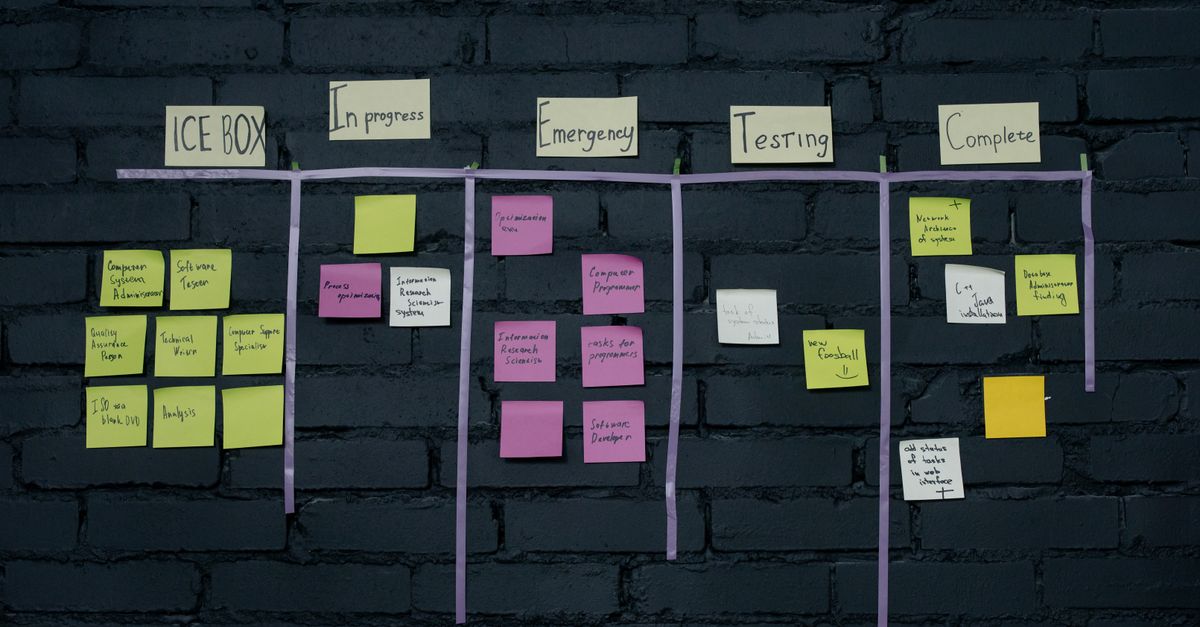
Building an Agile Organization: Beyond Scrum and Kanban
How to move from framework adoption to genuine agility — structure, culture, measurement, and the leadership behaviors that sustain it.
Most organizations that "do Agile" are running ceremonies, not delivering agility. They have stand-ups, sprint boards, and velocity charts — yet decisions still crawl through three approval layers, teams still wait weeks for a dependency, and the roadmap is still dictated by an annual budget cycle that has nothing to do with customer feedback. If you're an IT director who has adopted Scrum or Kanban and still feels the friction, you already know the framework was never the point. This article is about what comes after the framework: the organizational design, measurement discipline, and leadership behaviors that turn a set of practices into a genuinely adaptive organization.
- Background / Why This Matters
- Core Concepts and Architecture
- Implementation Strategy
- Scaling and Operational Considerations
- Common Mistakes / What to Avoid
- Frequently Asked Questions
- Conclusion
Background / Why This Matters
Agile started as a reaction to rigid, plan-heavy delivery. Two decades later, the irony is that Agile itself has been institutionalized into something equally rigid: mandatory ceremonies, certification pipelines, and dashboards that measure activity rather than outcomes. Research and industry surveys consistently suggest that a large share of "Agile transformations" fail to deliver their expected business results — not because the frameworks are wrong, but because organizations copy the mechanics and skip the operating model changes underneath.
For an IT director, the pain is concrete. You've likely seen at least a few of these:
- Framework theater. Teams complete sprints on time but ship things nobody uses, because there's no fast feedback loop to real customers.
- Dependency gridlock. A single feature needs sign-off from platform, security, and a shared data team — none of whom share your priorities or timeline.
- Velocity as a weapon. Story points get compared across teams, gamed, and inflated, corrupting the one signal they were meant to provide.
- Culture mismatch. Leadership says "empowered teams" but still expects Gantt-chart predictability and personally approves every architectural decision.
Genuine agility matters because the environment your systems operate in changes faster than any annual plan can accommodate. The organizations that win aren't the ones with the best sprint hygiene — they're the ones that can sense a change and reconfigure their people, priorities, and technology quickly.
Takeaway: Treat framework adoption as step one, not the finish line. Audit whether your Agile practices are actually shortening the loop between customer signal and shipped change — if they aren't, the ceremonies are cosmetic.
Core Concepts and Architecture
Agility is a property of the whole system, not a single team. Think of it as three interlocking layers.
1. Structural agility: how you're organized
Conway's Law is unavoidable: your systems will mirror your communication structure. If your org chart is a set of functional silos (a QA department, a DBA team, a separate ops group), your software will inherit those seams and your delivery will inherit those handoffs. Structural agility means organizing around value streams — durable, cross-functional teams that own a product or capability end to end.
The influential thinking in Team Topologies is useful here. It defines a small set of team types — stream-aligned, platform, enabling, and complicated-subsystem teams — and, more importantly, defines the interaction modes between them. A platform team should offer a self-service internal platform, not act as a ticket queue that stream teams wait behind.
2. Process agility: how work flows
This is where Scrum and Kanban live, but it extends further into how you fund and prioritize work. Annual project budgets are the single biggest anchor on agility. Moving toward persistent product teams with continuous funding — where you fund a team to pursue an outcome rather than a fixed scope — removes the incentive to defend a plan that reality has already outdated.
3. Cultural agility: how you decide and learn
This is the hardest and most decisive layer. It covers psychological safety (can an engineer say "this won't work" to a director?), decentralized decision-making, and a genuine tolerance for reversible experiments. Without it, the other two layers become empty structure.
| Dimension | Framework Adoption ("Doing Agile") | Organizational Agility ("Being Agile") |
|---|---|---|
| Team structure | Functional silos with Scrum labels | Durable value-stream teams |
| Funding | Annual project budgets, fixed scope | Continuous product funding by outcome |
| Decisions | Escalated up the hierarchy | Pushed to the team with context |
| Primary metric | Velocity / story points | Flow and outcome metrics |
| Feedback loop | Sprint review with stakeholders | Direct customer telemetry and usage data |
Takeaway: Map your current organization against all three layers. Most struggling transformations have invested heavily in process agility while leaving structure and culture untouched — which is why the process changes never stick.
Implementation Strategy
You cannot reorganize an entire IT function overnight without generating chaos and attrition. The reliable path is incremental and evidence-driven.
- Start with one value stream. Pick a product area with clear ownership and measurable customer impact. Reconfigure it into a genuine cross-functional stream-aligned team — including the QA, design, and ops capabilities it needs — and remove as many external dependencies as you can.
- Instrument flow before you optimize it. Before changing behavior, measure it. Use the four DORA metrics — deployment frequency, lead time for changes, change failure rate, and time to restore service — as your baseline. Tools like Jira or Azure DevOps for work tracking, combined with delivery-analytics platforms such as LinearB or Swarmia, and CI/CD data from GitHub Actions, GitLab CI, or Jenkins, give you the raw signal.
- Reduce batch size and handoffs. Shrink work items, adopt trunk-based development or short-lived branches, and automate the path to production. Lead time drops most when you remove wait states, not when engineers type faster.
- Give the team a real outcome, not a backlog. Shift the conversation from "ship these 40 features" to "reduce checkout abandonment." Let the team decide how. This is the single change that most reliably distinguishes agile teams from feature factories.
- Make leadership behavior explicit. Directors and VPs need to change their own behavior first: stop demanding date certainty on discovery work, model asking questions instead of giving answers, and publicly reward learning from a failed experiment.
This is precisely the kind of work where an outside perspective helps. Halkwinds' consulting practice frequently starts engagements by mapping value streams and instrumenting delivery metrics, because leaders are often too close to the org to see where the real bottlenecks sit. An external baseline also depersonalizes hard conversations about structure.
Takeaway: Prove the model on one team with real numbers before scaling. A single stream-aligned team that halves its lead time is a far more persuasive case for change than any slide deck.
Scaling and Operational Considerations
Once you have one or two teams working well, scaling introduces coordination problems that killed many earlier Agile programs.
Choose the lightest coordination that works
Scaling frameworks like SAFe, LeSS, and Scrum@Scale exist for a reason, but they carry different weights. SAFe is comprehensive and structured — useful in highly regulated enterprises — but heavy enough that it can reintroduce the bureaucracy you were escaping. LeSS is deliberately minimal. The right choice depends on your regulatory environment, org size, and cultural maturity. As a rule, adopt the least ceremony that solves your actual coordination problem, and add structure only when a real pain justifies it.
Invest in the platform
Stream-aligned teams can only stay fast if they aren't rebuilding infrastructure or waiting on shared services. A dedicated platform team providing self-service capabilities — infrastructure-as-code with Terraform, containerization via Kubernetes, and paved-road CI/CD pipelines — is what lets you add teams without proportionally adding coordination overhead. This is often where Halkwinds' cloud infrastructure and platform work complements a broader consulting engagement.
Manage the metrics honestly
At scale, metrics get politicized. Guard against this: DORA and flow metrics are for teams to improve themselves and for leaders to spot systemic constraints — not for ranking teams against each other. The moment you use velocity for performance reviews, you'll get inflation and lose the signal.
Takeaway: Scale coordination and platform capability in parallel. Adding teams without a supporting platform simply multiplies your dependency problems.
Common Mistakes / What to Avoid
- Reorganizing the boxes without changing the wiring. Renaming departments "squads" and "tribes" while keeping the same reporting lines and approval gates changes nothing.
- Mandating a framework top-down with no autonomy. Forcing every team into identical SAFe cadences ignores that a data platform team and a mobile app team have genuinely different needs.
- Measuring output instead of outcomes. Counting story points, commits, or tickets closed drives the wrong behavior. Measure flow (lead time, throughput) and business outcomes.
- Leaving leadership behavior unchanged. If executives still expect fixed scope, fixed date, and fixed budget simultaneously, no amount of team-level Agile will help.
- Neglecting the platform. Empowered teams stuck behind a manual, ticket-driven ops queue will never achieve real speed.
- Treating it as a one-time project. Agility is a continuous capability. Declaring victory and disbanding the change effort guarantees regression to the old model.
Takeaway: The failure mode is almost always cosmetic change without structural and cultural change. Ask yourself: "If I removed all the Agile vocabulary, would we actually work any differently?"
Frequently Asked Questions
Do we have to abandon Scrum or Kanban?
No. Scrum and Kanban are perfectly good tools for how a team manages
Explore Further