Written by
Halkwinds Editorial Team
Halkwinds Research & Editorial
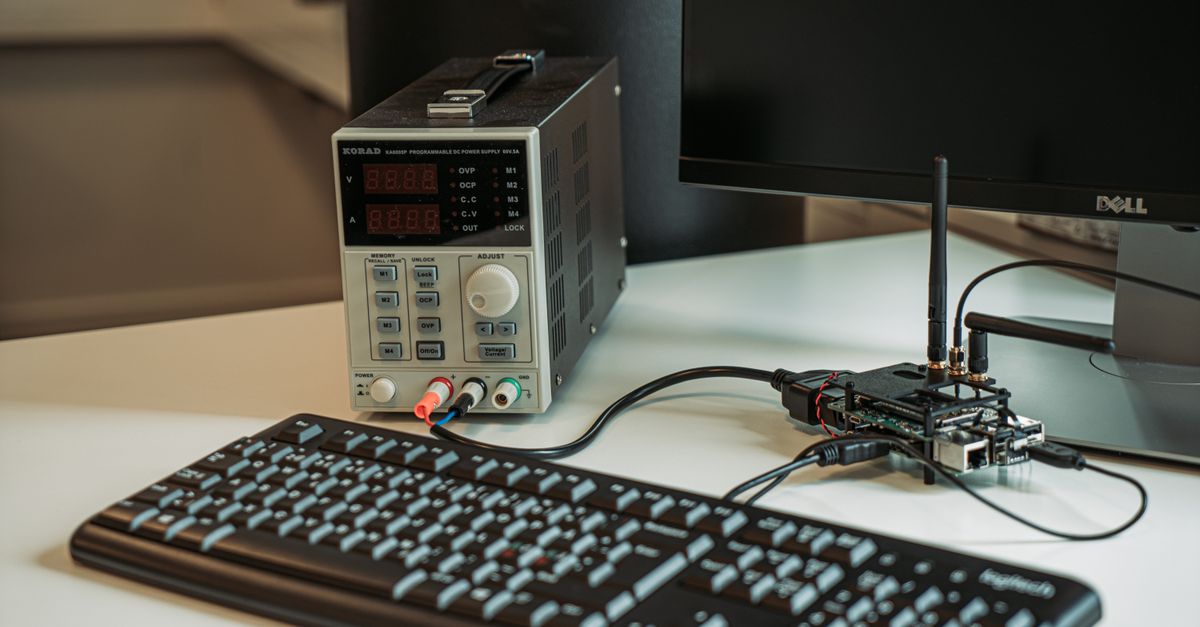
Edge AI: Running Models On-Device and Why It Matters
How to deploy ML models on edge hardware — use cases, model compression, hardware selection, and when edge beats cloud.
For years, the default answer to "where should our ML model run?" was the cloud. You'd spin up a GPU instance, expose an inference endpoint, and route every prediction request through it. That works — until latency, bandwidth costs, connectivity, or privacy constraints break the model. Edge AI flips the equation: instead of sending data to the model, you send the model to the data. For engineering managers weighing architecture decisions, understanding edge AI on-device deployment is increasingly non-optional, because a growing share of real-world workloads simply cannot afford a round trip to a data center. This article breaks down when edge beats cloud, how to compress and deploy models, which hardware to choose, and the operational traps that catch teams off guard.
- Background / Why This Matters
- Core Concepts and Architecture
- Implementation Strategy
- Scaling and Operational Considerations
- Common Mistakes / What to Avoid
- Frequently Asked Questions
- Conclusion
Background / Why This Matters
Edge AI means running inference on or near the device generating the data — a phone, a camera, an industrial sensor, a car, or a microcontroller — rather than in a centralized cloud. The concept isn't new, but three converging trends have made it practical at scale: cheaper capable hardware (NVIDIA Jetson modules, Apple Neural Engine, Google Coral), mature runtimes (TensorFlow Lite, ONNX Runtime), and model compression techniques that shrink networks by an order of magnitude without wrecking accuracy.
Why should an engineering manager care? Because the constraints driving edge adoption are business constraints, not just technical curiosities:
- Latency. A cloud round trip adds tens to hundreds of milliseconds. For a defect-detection camera on an assembly line running at 60 frames per second, that's unacceptable. On-device inference can respond in single-digit milliseconds.
- Bandwidth and cost. Streaming 4K video from 500 cameras to the cloud for inference is expensive and often impossible. Running the model locally and sending only events (or nothing) collapses that cost.
- Connectivity. Drones, agricultural sensors, offshore equipment, and vehicles cannot assume reliable networks. Edge AI keeps working when the connection drops.
- Privacy and compliance. Keeping raw data (faces, voices, medical readings) on the device sidesteps a huge category of regulatory and trust problems. Nothing leaves the device but the result.
Estimates vary, but industry analysts consistently project that the majority of enterprise-generated data will soon be created and processed outside traditional data centers. Whether the exact figure holds, the direction is clear.
Actionable takeaway: Before committing to a cloud-only inference architecture, run a quick audit — for each ML use case, ask whether latency, bandwidth, connectivity, or privacy could become a blocker at scale. If any answer is "yes," edge deployment deserves a serious evaluation.
Core Concepts and Architecture
Edge AI spans a spectrum of hardware, from beefy edge servers down to microcontrollers with kilobytes of RAM. Understanding where your use case sits determines everything downstream.
The edge hardware spectrum
- Edge servers / gateways: x86 or ARM machines with discrete GPUs. Handle multiple heavy models. Think retail store back-office boxes or factory gateways.
- Accelerated edge modules: NVIDIA Jetson (Nano, Orin), Google Coral, Qualcomm boards. Purpose-built for on-device deep learning at 5–60 watts.
- Mobile SoCs: Phones and tablets with dedicated neural accelerators (Apple Neural Engine, Qualcomm Hexagon).
- Microcontrollers (TinyML): ARM Cortex-M class chips running tiny models in a few hundred kilobytes. This is where TensorFlow Lite for Microcontrollers lives — keyword spotting, anomaly detection, gesture recognition on battery power measured in months.
The runtime layer
You rarely deploy a raw training-framework model to the edge. Instead you convert it to an optimized runtime format:
- TensorFlow Lite (LiteRT): The dominant choice for mobile and embedded. Supports quantization, hardware delegates (GPU, NNAPI, Core ML), and a microcontroller variant for TinyML.
- ONNX + ONNX Runtime: A framework-agnostic interchange format. Train in PyTorch, export to ONNX, run on a wide range of hardware backends. Excellent when you want portability across CPU, GPU, and specialized accelerators.
- NVIDIA TensorRT: Squeezes maximum throughput out of Jetson and other NVIDIA hardware via layer fusion and precision calibration.
Model compression techniques
Getting a model to fit and run fast on constrained hardware is the central engineering challenge. Three techniques do most of the work:
- Quantization: Convert 32-bit floats to 8-bit integers (or lower). Often the single biggest win — roughly 4x smaller and significantly faster, with modest accuracy loss when done with quantization-aware training.
- Pruning: Remove weights or entire channels that contribute little, then fine-tune. Structured pruning yields real speedups on hardware, not just smaller files.
- Knowledge distillation: Train a small "student" model to mimic a large "teacher." A well-distilled model can approach teacher accuracy at a fraction of the size.
Actionable takeaway: Map your use case to a hardware tier first, then pick the runtime that best supports that hardware. Don't choose the runtime before you know the target chip — that decision drives your compression toolchain.
Implementation Strategy
A repeatable edge deployment pipeline looks different from a cloud one. Here's a strategy that has held up across projects.
- Define the accuracy/latency/power budget upfront. Edge is a three-way tradeoff. Write down your minimum acceptable accuracy, maximum latency (e.g., "under 30ms per inference"), and power envelope. Every later decision is measured against these numbers.
- Prototype on target hardware early. Benchmarks on your laptop lie. A model that runs in 15ms on a desktop CPU may take 200ms on a Jetson Nano. Get the physical board in hand during week one, not week ten.
- Establish a conversion pipeline. Automate PyTorch/TensorFlow → ONNX or TFLite conversion, apply quantization, and validate accuracy against a held-out set after each conversion. Treat this like CI — a conversion that silently drops 8% accuracy should fail the build.
- Optimize iteratively. Start with post-training quantization (fast, cheap). If accuracy drops too far, move to quantization-aware training. Layer in pruning or distillation only if you still miss the budget.
- Package for the field. Bundle the model, runtime, and preprocessing logic into a deployable artifact — a container for edge servers, or firmware for microcontrollers.
Choosing hardware: a comparison
| Platform | Typical power | Best for | Runtime fit |
|---|---|---|---|
| NVIDIA Jetson Orin | 15–60 W | Multi-model vision, robotics, video analytics | TensorRT, ONNX Runtime |
| NVIDIA Jetson Nano | 5–10 W | Single-model vision, entry-level prototypes | TensorRT, TFLite |
| Google Coral (Edge TPU) | ~2 W | Efficient int8 CNN inference | TensorFlow Lite (quantized) |
| Mobile SoC (phone/tablet) | Device-dependent | Consumer apps, on-device personalization | TFLite, Core ML, ONNX Runtime Mobile |
| ARM Cortex-M (TinyML) | Milliwatts | Keyword spotting, sensor anomaly detection | TFLite for Microcontrollers |
This is where teams often benefit from outside experience. Halkwinds' AI & ML practice regularly helps engineering teams match a model architecture to the right edge hardware tier and build the conversion-and-validation pipeline that keeps accuracy honest — the two decisions most likely to sink a first edge project.
Actionable takeaway: Buy the actual target board before you write conversion code. Real hardware benchmarks are the only benchmarks that matter for edge.
Scaling and Operational Considerations
Getting one model onto one device is a demo. Running thousands of devices in production is a systems problem — and it's where edge AI projects most often stall.
Model updates and versioning
You can't SSH into 10,000 field devices. You need over-the-air (OTA) update infrastructure with staged rollouts, version pinning, and automatic rollback if a new model degrades in the field. Tie each deployed model to a version and know exactly which device runs which version.
Monitoring without the data
Cloud ML monitoring assumes you can inspect every prediction. On the edge, sending all inputs back defeats the purpose. Instead, capture aggregate telemetry — confidence distributions, inference latency, class frequencies — and sample edge cases for later review. Watch for drift: the world the device sees will diverge from your training data over time.
Fleet heterogeneity
Real fleets mix hardware revisions, OS versions, and firmware. A model that runs perfectly on one Jetson batch may behave differently on another. Maintain a hardware compatibility matrix and test against every SKU you ship.
Actionable takeaway: Treat OTA updates, versioning, and telemetry as first-class requirements from day one — not as things to bolt on after the pilot. Retrofitting fleet management is far harder than building it in.
Common Mistakes / What to Avoid
- Benchmarking on the wrong hardware. The most common and most expensive mistake. Desktop num
Explore Further