Written by
Halkwinds Editorial Team
Halkwinds Research & Editorial
End-to-End Product Development Process Explained
The eight-phase product development process that separates successful software products from failed ones — from discovery and architecture to launch and post-launch growth.
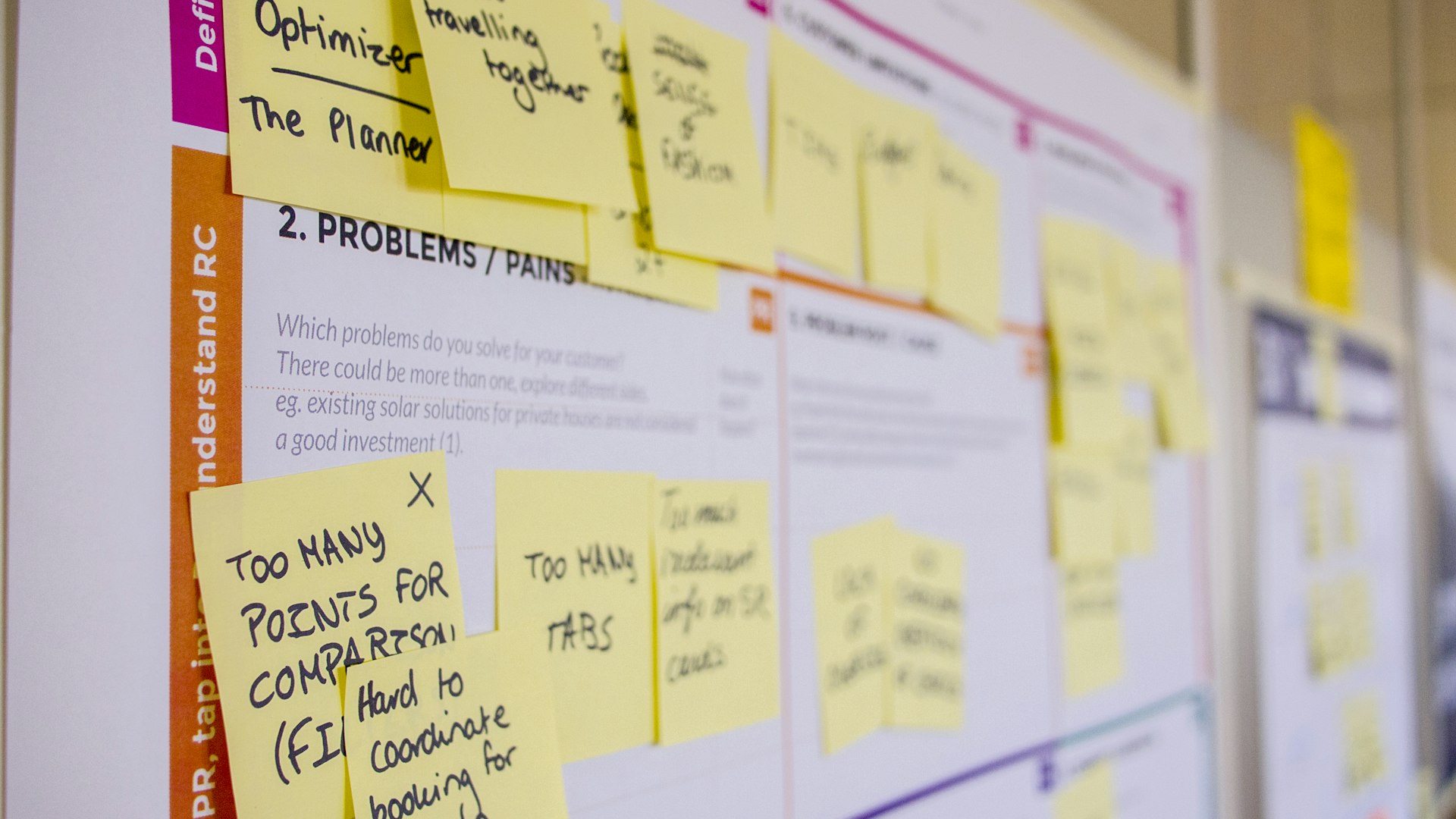
Most software projects fail not because of bad technology choices or incompetent engineers but because of process gaps: requirements that were never properly validated, designs that were never tested with users, architecture decisions that were never adequately reviewed, and quality gates that were never enforced. The end-to-end product development process that separates successful software products from failed ones is not complicated — but it requires discipline, particularly when timelines are tight and the temptation to skip steps is high.
Table of Contents
- Phase 1: Discovery and Problem Definition
- Phase 2: Product Strategy and Roadmap
- Phase 3: UX Research and Design
- Phase 4: Architecture and Technical Planning
- Phase 5: Iterative Development
- Phase 6: Quality Assurance
- Phase 7: Launch and Go-to-Market
- Phase 8: Post-Launch Growth and Iteration
- Common Process Failure Points
- FAQs
Key Takeaways
- Discovery (Phase 1) is the highest-leverage investment in product development — $1 spent on validated requirements prevents $5–$10 in rework and misdirected development
- Architecture decisions made in Phase 4 have the longest-lasting consequences — they deserve more deliberate investment than most agile teams give them
- Quality assurance is not a phase at the end — it is continuous, and defects caught in development cost 10–100x less than defects caught after launch
- The transition from development to growth (Phase 8) requires different organizational capabilities and processes than development — planning for this transition early prevents the "successful launch, failed scaling" pattern
Phase 1: Discovery and Problem Definition
Discovery is the phase that determines whether you build the right product or an expensive wrong product. It includes:
- Stakeholder interviews: Understanding the problem from the perspective of all affected parties — not just the project sponsor but the users, the operations team, the customer, and the technical team
- User research: Observational research and structured interviews with representative end users to understand actual workflows, pain points, and mental models
- Competitive and market analysis: Understanding the existing solution landscape, what has been tried, why it succeeded or failed
- Technical feasibility assessment: Identifying the highest-risk technical assumptions and validating them before committing to a development approach
- Constraint mapping: Documenting regulatory constraints, integration requirements, security requirements, and organizational constraints that constrain design choices
Discovery deliverables: problem statement document, user personas and journey maps, requirements priority matrix, technical risks and mitigation approaches, and initial scope definition. This work takes 3–6 weeks for most projects. Organizations that skip it routinely spend 6–12 months building the wrong thing.
Phase 2: Product Strategy and Roadmap
Product strategy translates discovery findings into a development plan: which problems to solve in which order, what defines success for each phase, how the product evolves from initial release toward the full vision. A good product roadmap is not a Gantt chart of features — it is a sequence of validated bets: "We believe that if we build X, we will see outcome Y, which we will measure with metric Z."
MVP definition is the critical output of this phase. The MVP scope should be the minimum set of features that lets you validate your riskiest assumption with real users — not a stripped-down version of everything. See our MVP vs full product guide for the framework.
Phase 3: UX Research and Design
Design is not making things look good — it is solving the interface problem: how does the user accomplish their goal through the software? Good design starts with user needs and works toward interface; bad design starts with interface and hopes it meets user needs. The process:
- Information architecture: structure of the content and navigation
- User flow design: how users move through key tasks
- Wireframes: structural layout without visual design decisions
- Usability testing on wireframes: validate interaction patterns before visual investment
- Visual design: applying visual identity, color, typography, and components
- Prototype testing: validate the full experience before development begins
Phase 4: Architecture and Technical Planning
Architecture decisions made here persist for the life of the product. They are the hardest decisions to reverse — technology stack, data model, multi-tenancy approach, API design, security architecture, deployment model — and they deserve more deliberate analysis than most agile teams give them. Key architecture decisions to document and review:
- Technology stack selection with rationale
- Data model for core entities and relationships
- API design and integration architecture
- Multi-tenancy approach (for SaaS) — see multi-tenant architecture guide
- Authentication and authorization model
- Infrastructure and deployment architecture
- Scalability approach and growth plan
- Security architecture and compliance controls
Phase 5: Iterative Development
Development in 2-week sprints with defined sprint goals, daily standups that surface blockers (not status updates), sprint reviews with stakeholder feedback, and retrospectives that improve team process. Key discipline points:
- Feature branches reviewed before merge; no direct main branch commits
- Automated test suite that runs on every commit — failing tests block deployment
- Definition of done that includes code review, tests, and documentation — not just "works on my machine"
- Technical debt tracking and explicit debt-reduction allocation (20–30% of capacity)
Phase 6: Quality Assurance
Quality assurance is continuous, not a final phase. The QA investment at each stage:
- During development: Unit tests, integration tests, code review
- Each sprint: Functional testing of new features and regression testing of affected areas
- Pre-release: End-to-end testing, performance testing, security scanning, accessibility testing
- Launch: Staged rollout with monitoring; rapid response capability for critical defects
Defect economics: a defect found in development costs 1x to fix. Found in QA: 5–10x. Found in production: 50–100x. The investment in development-time quality is the highest-ROI quality investment.
Phase 7: Launch and Go-to-Market
Launch is not shipping — it is the coordinated release of product, positioning, support, and success infrastructure. Technical launch checklist: production environment validation, monitoring and alerting configured, rollback plan documented, support team trained, and performance baseline established. The staged rollout — releasing to 5% of users first, validating before expanding — is the standard for reducing launch risk.
Phase 8: Post-Launch Growth and Iteration
The product work does not end at launch — it transitions from building to learning. Post-launch discipline: establishing a product analytics baseline, setting up feedback collection mechanisms, running user research continuously, and making roadmap decisions based on usage data rather than intuition. Organizations that treat launch as the end rather than a milestone fail to capture the full value of their development investment.
Our full-lifecycle software development practice covers all eight phases. See our related guides: development cost guide, partner selection guide. Talk to our team about your product development initiative.
Frequently Asked Questions
How long does a complete product development cycle take?
Simple applications: 3–5 months (Discovery: 3 weeks, Design: 3 weeks, Development: 8–12 weeks, QA: 2 weeks, Launch: 1 week). Complex enterprise products: 9–18 months with the same phase proportions but longer execution time per phase.
When should architecture be revisited?
Architectural review is appropriate: when scale requirements change materially (10x user growth), when major new capabilities require integration, when maintenance costs suggest structural problems, and annually as a proactive review. Ignoring architecture until a crisis forces a rewrite is the most expensive architectural approach.
How do you balance speed and quality in product development?
By distinguishing technical quality (code quality, test coverage, security) from feature completeness. Technical quality is not negotiable — cutting it creates debt that costs more to repay than it saved. Feature completeness is a design decision — building fewer features well is almost always better than building more features poorly.
Explore Further