Written by
Halkwinds Editorial Team
Halkwinds Research & Editorial
Manufacturing Execution Systems (MES): Architecture and ERP Integration
How MES platforms bridge shop-floor equipment and enterprise systems through production scheduling, real-time data collection, and the ISA-95 integration model
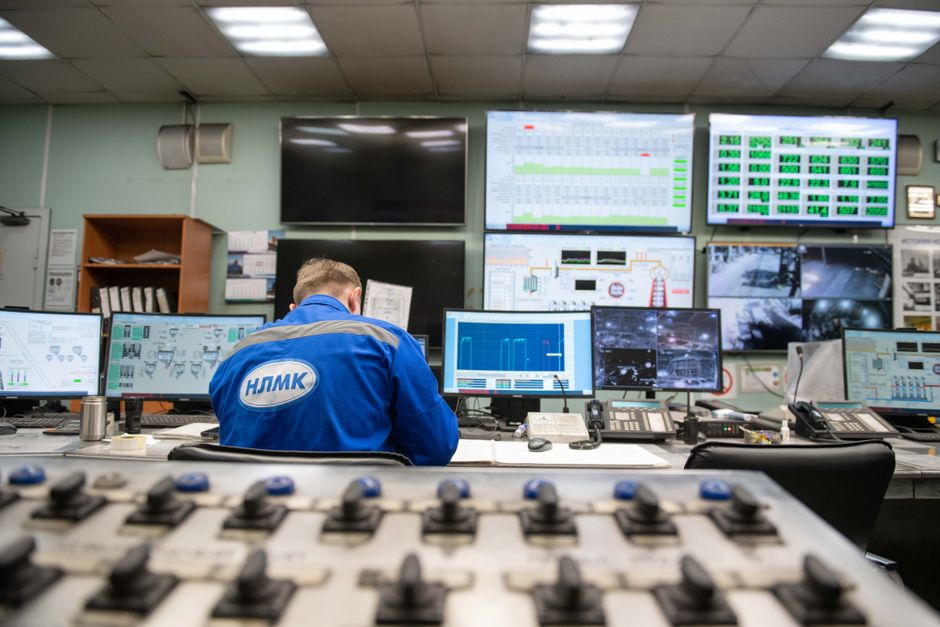
Most manufacturing ERP rollouts stall at the shop-floor door. The system tracks purchase orders, inventory valuation, and financials cleanly, but has no idea what's happening at the machine right now — whether a work order is running, whether a tool is out of calibration, or whether the line has been down for forty minutes waiting on a part. That gap is what a Manufacturing Execution System is built to close, and it's also where most digital transformation budgets quietly get spent.
This article is for engineering leaders and plant IT teams evaluating an MES build, upgrade, or ERP integration project. We cover the architecture layers a modern MES needs, how scheduling and work order tracking flow through it, how real-time data moves up from PLCs and SCADA, and why ISA-95 keeps MES and ERP from quietly disagreeing with each other.
Table of Contents
- What a Manufacturing Execution System Actually Does
- The Core Architecture of a Modern MES
- Production Scheduling and Work Order Tracking
- Real-Time Data Collection from PLCs and SCADA
- The ISA-95 Standard: A Shared Language Between MES and ERP
- Integration Patterns: How MES and ERP Actually Talk to Each Other
- Common Integration Failure Points
- Build, Buy, or Integrate: Choosing Your Architecture Path
Key Takeaways
- MES and ERP occupy different levels of the ISA-95 model (ERP at Level 4, MES at Level 3), and projects that skip formal mapping between these levels typically generate the most rework during UAT.
- Real-time data from PLCs and SCADA commonly runs on a five-second to one-minute cadence for machine state — a different data contract than the transactional, batch-oriented updates ERP expects.
- Middleware-based integration (an ESB, iPaaS, or MES connector) is, in our experience, more maintainable long-term than point-to-point interfaces, even though point-to-point often looks cheaper upfront.
- Work order status synchronization is the single most common source of MES/ERP data mismatch, usually because the two systems define a completed state differently.
What a Manufacturing Execution System Actually Does
An MES sits between planning and execution. ERP tells the plant what to produce, in what quantity, and by when. The MES turns that plan into something a machine operator, line supervisor, or automated cell can act on — a dispatched work order, a routing sequence, a quality checkpoint, a material consumption record.
Functionally, most MES platforms cover some combination of production scheduling, work order and dispatch management, work-in-process tracking, quality management, material and genealogy tracking, and performance analytics such as OEE (overall equipment effectiveness). Not every deployment needs all of these on day one — a common mistake is licensing the full suite before data is flowing reliably from even one production line.
The Core Architecture of a Modern MES
A modern MES architecture is typically layered into four tiers:
- Equipment layer — PLCs, sensors, HMIs, and SCADA generating the raw signal: machine state, cycle counts, temperature, pressure, part counts.
- Data acquisition layer — OPC UA servers, historian connectors, or edge gateways normalizing protocols (Modbus, EtherNet/IP, Profinet) into a consistent data model.
- MES application layer — the scheduling engine, work order management, and quality logic that consumes normalized shop-floor data.
- Integration layer — the interface to ERP, PLM, and WMS, usually built on message queues or REST APIs rather than direct database connections.
This layering matters because each tier changes at a different pace — equipment on a capex cycle, the application layer with process improvements, integration when ERP upgrades. Collapsing layers, like scheduling logic that talks directly to PLC registers, is a common shortcut that's almost always the first thing re-architected once the plant scales past one line.
Production Scheduling and Work Order Tracking
Production scheduling in an MES operates at a finer grain than ERP scheduling. ERP typically plans at the order or lot level over days or weeks; MES sequences operations at the machine and shift level, accounting for changeover time, tooling, operator certification, and real-time line status — usually via a finite-capacity engine that can react to a machine going down without a full ERP re-plan.
Work order tracking keeps these two planning horizons honest. When ERP releases a production order, the MES decomposes it into dispatchable operations, tracks status transitions (released, in process, complete, closed), and records actual quantities, scrap, and labor or machine time against each operation. That data flows back to ERP for costing, inventory relief, and order closure — the handoff where architecture decisions hold up or fall apart under volume.
Real-Time Data Collection from PLCs and SCADA
Shop-floor data collection is the part of MES architecture that looks least like conventional enterprise software, and treating it like a normal application integration is a common, expensive scoping mistake. PLCs expose data through industrial protocols, not REST endpoints. SCADA aggregates that data for human operators, historians archive it as time-series data, and the MES needs a subset in near real time to drive scheduling and quality logic. In practice this usually means an OPC UA layer (or a protocol-specific driver) feeding an edge gateway, which buffers and normalizes tags before publishing them — commonly over MQTT — to the MES data collection service.
Latency requirements vary by use case: machine state for OEE calculation is often fine at sub-minute polling, while quality interlocks or andon-style alerts need sub-second response. A single pipeline serving both needs with one polling interval is a frequent source of underperformance — the architecture usually needs to separate the low-latency control path from the higher-latency reporting path.
The ISA-95 Standard: A Shared Language Between MES and ERP
ISA-95 (formally ANSI/ISA-95, aligned with IEC 62264) gives MES/ERP integration a common vocabulary instead of a custom one for every plant. It defines a functional hierarchy: Level 4 is business planning (ERP — orders, finance, procurement), Level 3 is manufacturing operations management (MES — scheduling, dispatch, quality, tracking), and Levels 0–2 are the process, sensing, and control layers.
What makes ISA-95 useful isn't the diagram of levels — it's the object models it defines for information crossing the Level 3/Level 4 boundary: production schedule, production performance, equipment, material, and personnel. Two systems from different vendors integrate cleanly when both map to the same object definitions, because the standard specifies what a schedule record or work order response actually contains, not just that one exists.
In our experience, projects that skip an explicit ISA-95 mapping exercise — going straight to field-level mapping between two systems — work fine at go-live and then become brittle the first time either system is upgraded or a second plant is added. The mapping isn't a compliance checkbox; it's what keeps the integration replaceable.
Integration Patterns: How MES and ERP Actually Talk to Each Other
Three integration patterns show up most often, in roughly this order of long-term maintainability:
- Middleware or ESB-based integration — MES and ERP exchange messages through a central layer (an ESB, iPaaS, or manufacturing integration hub). Isolates each system from the other's schema changes; generally the most resilient to upgrades.
- API-based point-to-point integration — direct REST or SOAP calls between MES and ERP. Faster for a single plant, but every additional system or site multiplies connections to maintain.
- Database-level integration — direct table reads/writes between the two databases. Fastest to build, and almost always the first thing that breaks during an ERP upgrade.
Vendor-supplied connectors (SAP's manufacturing integration tooling, Oracle's manufacturing cloud connectors, MES-native ERP adapters) can shortcut this work, but still need evaluating against the ISA-95 object model — a connector strong on work order status may be thin on quality genealogy.
Common Integration Failure Points
Patterns that show up repeatedly across MES/ERP integration projects:
- Mismatched definitions of complete. ERP may close an order when quantity is met; MES may hold it open pending quality disposition. Without an explicit state-mapping table, this produces phantom open orders or premature inventory relief.
- Master data drift. Item numbers, routings, and work centers maintained independently in both systems diverge over time unless one is designated the system of record.
- Volume mismatch. ERP interfaces are typically sized for hundreds of transactions a day; shop-floor collection can generate that many events per minute. Raw events into ERP without MES-layer aggregation is a common cause of performance problems.
- No reconciliation process. Even good integrations occasionally drop or duplicate messages. Skipping a periodic reconciliation report usually means discrepancies surface only at audit time.
Build, Buy, or Integrate: Choosing Your Architecture Path
Three paths are available to most manufacturers: adopt a commercial MES platform (Siemens Opcenter, Rockwell/PTC, Dassault Systèmes) and integrate it with existing ERP; extend ERP-native manufacturing modules where the vendor offers them; or build a custom MES for a specific process. Commercial platforms usually win when plant processes fit standard discrete or process patterns and speed to value matters most; custom builds get justified when the production process is itself a competitive differentiator — complex batch genealogy in pharma, for instance.
Regardless of path, the integration layer deserves as much architectural attention as the MES application itself. A well-chosen MES connected through a fragile, point-to-point integration will underperform a basic MES connected through a properly designed, ISA-95-aligned one.
Halkwinds works with manufacturing clients on exactly this kind of systems architecture — MES selection, ERP integration design, and shop-floor data pipelines that hold up past the first plant rollout. If you're weighing how analytics fits into this stack once data is flowing, our piece on AI in manufacturing real-world applications covers where that layer adds value. If you're scoping an MES/ERP integration and want a second opinion before committing budget, reach out to our team.
Frequently Asked Questions
Do we need a full MES if we already have strong ERP manufacturing modules?
It depends on the visibility you need. If order-level tracking is sufficient, a full MES may be overkill; once you need machine-level scheduling, real-time quality holds, or sub-minute equipment data, ERP modules generally can't keep up.
How long does a typical MES/ERP integration project take?
For a single plant with one ERP instance, a well-scoped integration commonly runs several months from requirements through go-live, assuming ISA-95 mapping happens early rather than deferred to testing. Multi-plant environments extend that timeline.
Is ISA-95 mandatory, or just a best practice?
It's not a regulatory requirement in most industries, though it's commonly referenced in validated environments like pharma. Elsewhere it's a best-practice reference model, but skipping it usually just means reinventing an equivalent mapping from scratch.
What's the biggest technical risk in connecting PLCs and SCADA to an MES?
Protocol fragmentation across equipment vintages — older PLCs on proprietary protocols next to newer OPC UA-native equipment. The fix is a normalization layer (an edge gateway or OPC UA server) presenting a consistent data model regardless of what's underneath.
Can this architecture support multiple plants with a single ERP instance?
Yes — a shared ERP instance with plant-local MES deployments feeding into it through a common integration layer is a common target architecture. Each plant's MES needs to map to the same ISA-95 object model so ERP isn't handling a different contract per site.
Explore Further